The ice in my glass had melted past the point of usefulness, turning good bourbon into something watered-down and apologetic. I didn't care. The Rusted Spur had that amber light going, the kind that forgives everyone's face, and Gizmo was holding court at the far end of the bar about some conspiracy involving the postal service and carrier pigeons, and nobody was asking me anything, which meant I was about to say something anyway.
That's how it works. You sit long enough in the quiet, the quiet starts pressing on your chest like a hand.
Mary slid onto the stool next to me, smelling like cigarette smoke and that vanilla perfume she buys at the dollar store and swears is identical to something French. She didn't say hello. She just looked at my face and said, You got that look again.
What look?
The one where you're about to make everybody in here feel something they didn't sign up for.
Conrad laughed from two stools down, that low rumble of his that sounds like a diesel engine trying to turn over on a cold morning. He was nursing a Budweiser with a seriousness that bordered on liturgical. Next to him, Delilah was peeling the label off a Michelob Ultra with surgical precision, her acrylic nails clicking against the glass like a metronome. Tommy Reeves had his back to the pool table, cue chalk on his fingers, pretending he wasn't listening. Sarah sat two booths down from the corner, her hands wrapped around a glass of red wine like she was keeping it warm instead of the other way around, her eyes doing that thing they do where she looks like she's only half-listening but is actually recording every syllable to memory. Jackie Montrose sat in the corner booth alone, which was her preferred configuration, eating peanuts and reading a true crime paperback with a woman screaming on the cover. And Sully—old Sully with the glass eye and the Merchant Marine tattoos—was half-asleep at the end of the rail, though he'd later claim he heard every word.
I ever tell y'all about my grandmother? I said.
Which one? Mary asked.
The one who was really my mother.
That landed in the room the way a stone lands in still water. Not loud. But the ripples went everywhere. Even Gizmo shut up about the pigeons.
Not your actual mother, Conrad said carefully. He knew enough of that territory to tread lightly.
No. My actual mother was— I took a sip of that sad, diluted bourbon and let it sit on my tongue, tasting nothing. My actual mother was a weather system. You didn't understand her. You just survived her. But this woman—my grandmother—she was the kitchen you ran to when the storm hit.
Delilah stopped peeling her label. My grandma was like that, she said quietly.
Maybe. But this woman— I turned the glass in my hands, watching light fracture through the ice. She had a shop. Did hair. And I used to sit in the corner of that shop and pretend I was reading, but really I was memorizing every damn thing she did. The way she'd tilt a woman's chin up to the light and say, beauty isn't about hiding, it's about revealing. The way she'd make someone who walked in looking like they'd been beaten by the week walk out like they remembered they had a spine.
She sounds like a real one, Tommy said from the pool table, and I could tell by his voice he meant it.
She was the realest person I ever knew. And she was sick. Diabetic. Every morning, the insulin. She never hid it. She'd just— I mimed the injection, casual as pouring coffee. Body needs what it needs, she'd say. Like it was nothing. Like needing something to survive wasn't supposed to be a source of shame.
Mary lit a cigarette, which you couldn't technically do inside the Spur anymore, but Hank behind the bar had stopped enforcing that particular law around eleven p.m. on any given night. The smoke curled up toward the ceiling fan and got sliced into ribbons.


She had this bookshelf, I said. And she'd let me sit in this big old corduroy chair—high-backed, worn down to the nap—and I'd feel like a damn queen in that chair. Like nothing in the world could reach me. She'd pull down books and hand them to me, and I'd put them back in order. She had everything. Capote. Friedan. Kennedy biographies. But one day she put this dictionary in my hands. Heavy as a brick. Old. The spine cracked when I opened it and it smelled like— I paused, because the memory hit me so hard in the sternum I had to catch my breath. It smelled like paper and glue and someone else's whole interior life.
Conrad set his beer down. A dictionary made you emotional.
A dictionary she'd lived in, Conrad. There were coffee rings on the pages. Dog-eared corners. And she'd underlined words—specific words—so hard the pencil tore through the paper in places. Words like chrysalis. Like threshold. Like liminality.
The hell is liminality? Gizmo asked.
It means being in-between. Being neither one thing nor the other. Being in the doorway. I looked at her. She gave a kid who felt like they didn't belong anywhere a book full of words for existing between worlds, and she did it like she was handing over a glass of sweet tea. Casual. Like it wasn't the most important thing anyone had ever done for me.
The bar was quiet in that way it gets when people are actually listening, which is different from the quiet of people waiting for their turn to talk. Even Jackie looked up from her screaming-woman paperback.
She had a garden, I said, and my voice had gone rougher than I wanted it to. We'd kneel in the dirt together and she'd say, plants don't give a damn about expectations, they just grow toward what feeds them. And then she'd look at me sideways, like she was saying something else entirely underneath the thing she was saying.
She knew, Mary said. Not a question

She knew something. I don't think she had the words for it any more than I did. But she— I swallowed. When other people in my life looked at me, they saw what they expected to see. A kid that fit certain boxes. She looked at me and saw the boxes didn't fit, and instead of trying to shove me into them, she just... made space. She'd say things like, some people are born with eyes that can't see certain colors. Doesn't mean those colors aren't real.
Damn, Delilah whispered.
Once I— I stopped. Started again. I did something. I was trying something on. Something I wasn't supposed to want. And my mother—the weather system—caught me, and the disgust on her face could've stripped paint off a barn. But my grandmother stepped in and said, calm as Sunday morning, let the child play. Imagination is how we try on different lives.
I could feel the heat in my own face, the old shame flaring up like an ember you thought was dead, and I drank from my glass even though there was nothing left in it but water and memory.
Later she told me, sometimes we keep our treasures hidden until the world is ready to see them. My voice cracked on the word treasures and I didn't try to fix it. She slipped it into my bag when no one was looking. What I'd been caught with. She smuggled it back to me like contraband.
Sarah set her wine down with a soft click, the kind of deliberate sound a person makes when they want you to know they're about to say something that matters. She wasn't just protecting you, she said, her voice steady and low, the way candlelight is steady. She was telling you it was yours to keep. That it belonged to you.
The air between us held that sentence like a cupped hand holds water—careful, trembling, aware of what spills if you move wrong. I looked at her, and something behind my ribs shifted like a door finding its frame.
Yeah, I said. Yeah, that's exactly what she was doing.
Tommy had set down his pool cue. Sully's one good eye was open and fixed on me.
When she died— The words came out flat, the way words do when the feeling underneath them is too big for inflection. When she died, my mother cleaned out her house like she was gutting a fish. Threw everything away. Books, clothes, all of it. Gone. I saved what I could. Hid it under my mattress like I was hiding drugs. A recipe box. A scarf. A journal. Because those things were proof that someone had seen me, and I was terrified that if I lost the proof, maybe it hadn't been real.
Mary put her hand on my arm. She didn't squeeze. She just rested it there, warm and present, the way you'd lay a hand on a horse's flank to let it know you're not a threat.
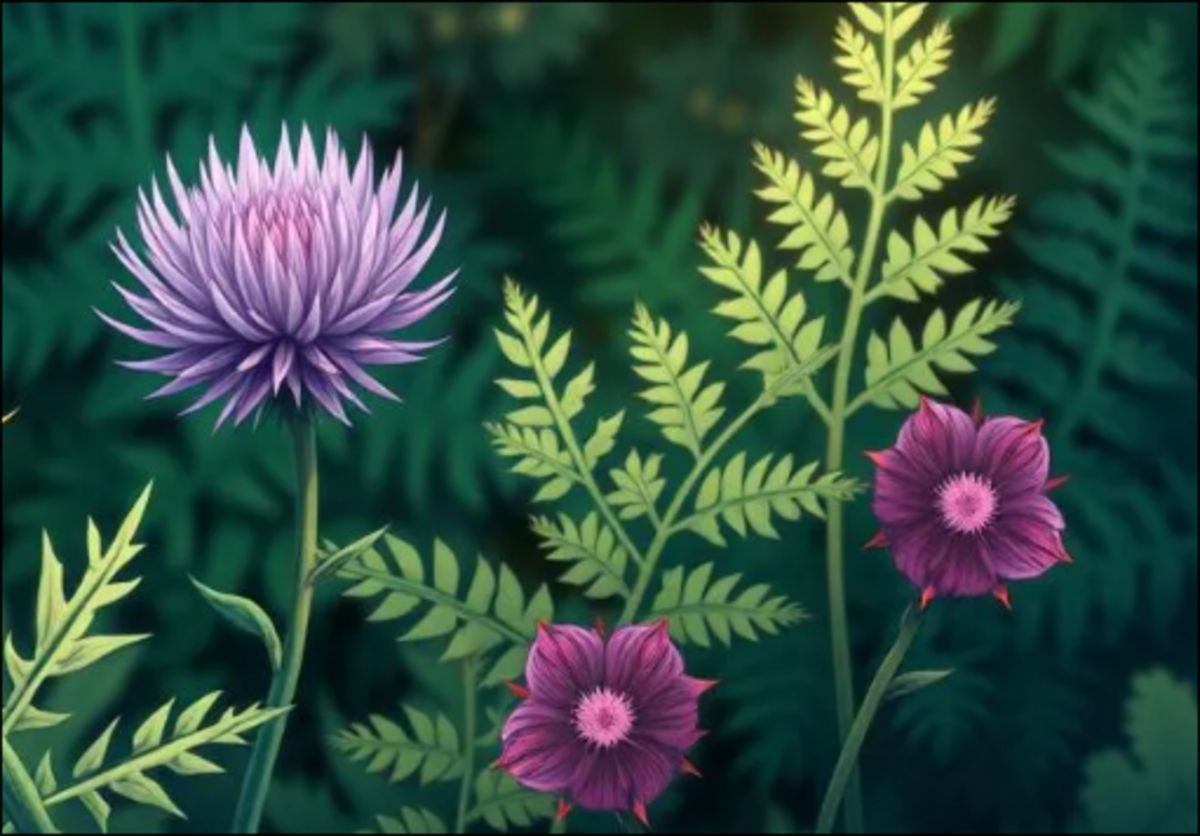
There was a tree, I said, and I almost laughed because it sounded insane. A Yule tree. After Christmas, my mother told me to throw it on the back of the property and let it rot. And I did. But the night of my grandmother's funeral, I went out to that tree under this moon that was—Mother help me, it was bright and cold as a scalpel—and I told that tree everything. Every secret she'd helped me understand about myself. And that tree—
It didn't die, Conrad said.
I looked at him. How'd you know?
Because that's how the story has to go, he said, and there was something in his voice I'd never heard before, something that sounded like recognition.
It didn't die. It stayed green. Put out new growth. Birds nested in it. My mother wouldn't even look at it. She'd take her coffee to the other side of the house to avoid seeing that defiant, impossible, still-alive tree.
Gizmo, Mother bless her, said, That's botanically unlikely, and Delilah elbowed her in the ribs so hard she coughed.
It was her last lesson, I said. That some things refuse to die just because someone else decided they should. Love. Memory. Truth. I looked down at my empty glass, at the ghost of bourbon clinging to the sides. Who you actually are.
The jukebox kicked on—Patsy Cline, because the Rusted Spur's jukebox had a soul and impeccable timing—and for a moment nobody said anything. The song filled the space like warm water filling a bathtub, slow and inevitable.
She never knew, then, Mary said finally. What you—who you—
She never had the words. But she gave me permission to find them. I set the glass down. Every time I cook one of her recipes, every time I— I gestured vaguely at myself, at this body I'd finally claimed, this woman I'd finally become. She's in all of it. She gave me the ingredients before I even knew what I was baking.
Sully, from the end of the bar, his voice like gravel in a tumbler: Best kind of love there is. The kind that plants seeds it'll never see bloom.
The whole bar sat with that for a moment, the way you sit with a hymn after the last note fades.
Then Gizmo said, So you gonna tell us about the recipes or what? and the room cracked open with laughter, and Mary squeezed my arm, and Conrad raised his Budweiser in a toast to women who see clearly, and Sarah lifted her wine glass without a word—just that slow, knowing nod that said more than a speech—and Hank poured me a fresh bourbon without being asked, and somewhere in the space between grief and gratitude, between the woman I was and the woman I'd become, I felt hands that smelled of flour and earth and lavender settle gently on my shoulders.
Clean it up. Then we'll talk.
Now tell me what's really broken.
I picked up the fresh glass. The bourbon caught the light like liquid amber, like honey, like the color of her kitchen in late afternoon when the sun came through the curtains and turned everything to gold.
Her name was Helen, I said. And she was my whole damn world.

For the women who see us before we can see ourselves.

