The bass from the speakers had settled into the bones of the building tonight,
a low-frequency hum that turned the brick walls into something almost respiratory, and I could feel it through the bartop the way you feel a pulse through someone's wrist when you're checking whether they're still alive. Supertramp's "The Logical Song" was unspooling from the speakers with that particular cruelty the song carries — the cheerful melody hiding a man screaming about being taught to be sensible, practical, clinical — and the irony of it threading through a basement full of people who'd been taught exactly the same thing and decided, collectively, to fucking refuse.
The wood grain under my fingers was still warm from whatever drink had been there before mine. I traced a knot in the bartop — a new one, or one I'd never noticed, spiral-shaped like a fingerprint pressed into the oak by someone who'd leaned here hard enough to leave themselves behind. The air smelled like Della's kitchen doing something unconscionable to chicken thighs, rosemary and garlic and the sharp crack of black pepper hitting a hot cast-iron skillet, and underneath that the permanent basement note of old brick holding its breath.

Rando Anime
Miguel materialized the way he always does — not walking so much as appearing, like the bar itself decided I needed tending and produced him from behind the tap handles.
Rough one? he asked, already reaching for a bottle I couldn't see.
Define rough.
The kind where your jaw's been clenched since you sat down and you don't know it yet.
I unclenched my jaw. The titanium in my leg sent its nightly correspondence up through the sciatic nerve — a love letter written in electricity and returned to sender, every single time, the nerve damage making sure I never forgot I was assembled from replacement parts and stubbornness.
He set the glass down between us like a treaty. The liquid inside was the color of a bruised sunset — deeper than amber, edging into mahogany, with legs that clung to the glass like they had somewhere better to be but couldn't bring themselves to leave.
Balcones Single Malt, Miguel said, and his voice carried that particular reverence he saved for Texas whiskeys, the ones that aged too fast in the heat and came out tasting like they'd lived harder than they should have. Mesquite smoke and dried cherry. Little bit of leather. She's aggressive but she'll hold you right.
I brought the glass up and the nose hit first — not just cherry but something fermented and dark underneath, a sweetness that had gone through something, plus the smoke he'd promised, campfire and desert scrub, and then a finish that tasted like someone had distilled brown sugar through pecan wood and added a single drop of something that might have been grief or might have been resolve. I couldn't tell. That was the point.
She's mean, I said, and I meant it as a compliment.
So are you. Miguel's wedding ring caught the light as he polished a glass, and he smiled with half his mouth, which meant the other half was holding something back for later.
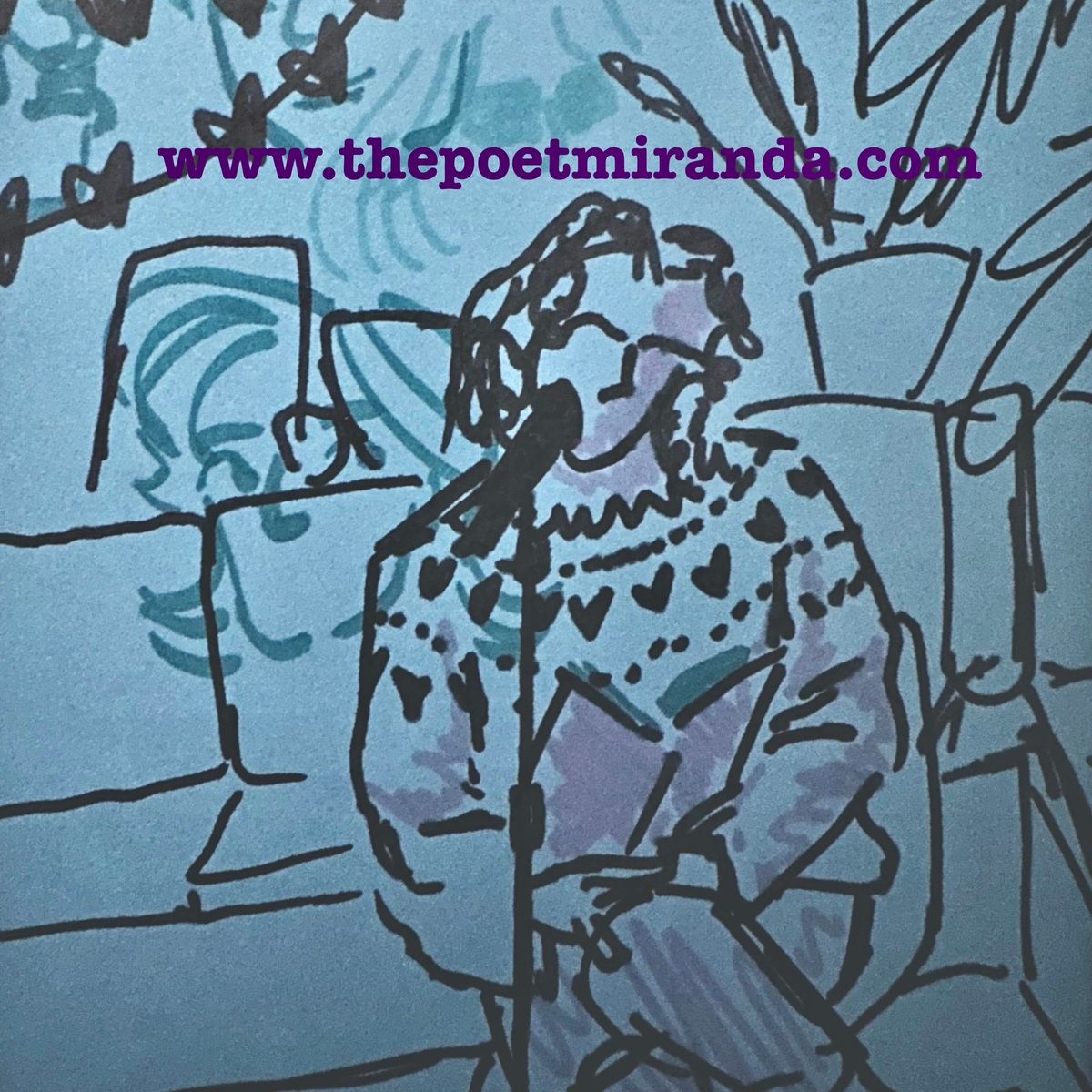
Keira was in her corner. Book open, legs folded, existing in that way she had of being the most present person in any room while appearing to occupy the least space. She'd looked up when I came down the stairs — one look, the whole diagnostic running behind those eyes, the assessment complete before I'd reached the third step — and then she'd gone back to her pages. The look said: I know. I'm here. Come find me when you're ready. The book said: And I'll be doing something useful while you figure your shit out.
Phoenix was the first anomaly I noticed. They were at the corner table — not their usual spot by the pool table with River, but the big round one near the stage that nobody claimed unless they were building something, planning something, spreading papers or screens across its surface like generals mapping campaigns. Tonight the surface was covered in books. Not regular books. Manga volumes, stacked in columns like a tiny skyline, spines facing outward with their backward pagination and their cover art ranging from delicate watercolor to something that looked like an explosion had achieved sentience and decided to accessorize.
Gus was beside them, hunched over a tablet with the intensity of someone who'd recently discovered a new religion and was still in the evangelical phase. His face was doing that thing it did when he'd found something he understood — the small-town tension draining from his jaw, replaced by concentration so complete it bordered on devotion.
And Ezra — blue hair catching the overhead light and turning it into something that belonged on a stained-glass window — Ezra was standing behind both of them, pointing at something on a screen and talking fast enough that their piercings were vibrating sympathetically with their jaw.
— and see, that's the thing, the whole yuri genre isn't just about girls kissing girls, it's about the space between the kissing, it's the emotional architecture —
The what now? Bubba's voice arrived from the adjacent table like tectonic plates learning to speak. He was in his usual spot by the window — only tonight he'd turned his chair to face Phoenix's table, which was the Bubba equivalent of pulling up a lawn chair to watch fireworks. His massive frame cast a shadow that could have sheltered a small family, and he was looking at the spread of manga on the table the way a man raised on Georgia dirt roads looks at a spaceship: not hostile, not afraid, just profoundly unsure where the door was.
Emotional architecture, Ezra repeated, and they pulled a volume from the stack — slim thing, cover showing two girls standing back-to-back on a rooftop with cherry blossoms doing that thing cherry blossoms do in manga, which is to say existing primarily as a visual metaphor for something too beautiful to last. Like, okay. Bubba. You and Remy.
Don't you bring Remy into whatever this is, Bubba growled.
Too late. You and Remy spent thirty-three years not saying the thing, right? Circling each other like two planets stuck in orbit? That's yuri energy. That's the slow burn. That's two people whose entire relationship lives in the space between what they say and what they mean.
Bubba was quiet for a moment. The man could make silence into an event — geological, patient, the kind of quiet that had weight and temperature. He picked up his drink — bourbon, neat, something dark enough to match his expression — and took a sip that lasted longer than most people's confessions.
You're telling me, he said, finally, that Japanese comic books already wrote my love story.
Multiple times, Phoenix said, not looking up from their manga. Their hair tonight was silver at the roots bleeding into violet at the tips, catching the stage lights like something half-formed between moonlight and bruise. With better outfits.


Leila had been watching from the bar, phone in one hand, drink in the other, the way she always divided her attention between the digital war and the physical room. She was wearing that particular expression — the one that meant her political brain was cataloging this conversation for its structural implications, its pedagogical value, its potential as a framework for understanding something she'd been tracking through entirely different channels.
This is actually relevant to something, she said, sliding off her barstool and carrying her drink to the growing constellation of bodies around Phoenix's table. Her voice had that edge — not aggression but the particular sharpness of a mind that was always building connections between things other people treated as unrelated. The representation question. How a culture processes queerness through its storytelling tells you everything about where that culture actually is versus where it pretends to be.
Yes, Ezra said, pointing at Leila like she'd just completed their sentence from across the room. Exactly fucking that.
Miranda arrived at the table the way Miranda arrived everywhere — as though she'd been waiting for the exact right moment to become visible, her presence materializing with the quiet authority of a woman who'd survived enough to know when a conversation needed her and when it didn't. Tonight it needed her. She pulled a chair into the circle with one hand, her other holding a glass of red wine that looked almost black in the basement light.
I heard emotional architecture, Miranda said. And I heard someone say yuri. Which means someone's about to explain anime queerness to the olds, and I want front-row seats because I have thoughts.
You always have thoughts, Della yelled from the kitchen, and the sizzle of something hitting oil punctuated it like a cymbal crash.
And they're always better than yours, baby, Miranda fired back, and the kitchen cackled — Della's laugh was something that happened to rooms, not in them, the kind of sound that rearranged furniture.
The Clash kicked in from the speakers — "Should I Stay or Should I Go" — and the timing was so perfect it had to be accidental because no DJ in history has ever been that good on purpose. The opening riff cut through the basement like a question that's been asked so many times it's become structural, load-bearing, the kind of question you build your whole life around answering.
Okay, Phoenix said, and they squared up in their chair the way a professor settles behind a lectern, except this professor had a septum piercing and a ruby ring from their partner and the kind of authority that comes not from credentials but from having lived inside the thing they were explaining. Let's start from the beginning. Who knows what bara is?
Dead silence. Bubba's eyebrows performed an act of controlled ascension. Miranda took a sip of wine that communicated volumes.
Right, Phoenix continued. So. Bara. Gay male manga. Made by queer men, for queer men. Big bodies. Hairy chests. Muscle. Real desire, not the sanitized version. Think of it as the genre that said, we're not going to draw ourselves as delicate pretty boys for straight women's consumption — we're going to draw ourselves as we are, thick and sweating and wanting each other with zero apology.
So it's porn, Bubba said, flatly.
Some of it's porn, Gus said, and his voice cracked slightly on the word, the residual Baptist in him making one last play for the steering wheel before the rest of him shoved it aside. Some of it's — it's love stories. With bodies that look like actual people. Like — He paused. Like bodies I recognize.
That landed different. The room shifted. I could see it from where I sat at the bar, the way Gus's words changed the temperature around the table the way a window opening changes a room — same air, different direction. Because Gus was twenty-one and from a town where his body, his desire, his fundamental self had been a thing to be hidden or beaten or prayed out of existence, and here he was telling a table full of people that somewhere in a stack of Japanese comics, someone had drawn a man who looked like the men he wanted and that recognition — that simple, devastating act of being seen by a drawing — had mattered.
Bubba set his glass down very carefully. The care was the point.
Tell me more about that, he said. And his voice had dropped into that register — the Georgia bedrock tone, the one that sounded like the earth itself deciding to pay attention. That wasn't curiosity. That was a man who'd spent decades being Black and gay in a world that drew neither of those things with any accuracy, and he knew exactly what Gus was saying because he'd spent fifty-something years never seeing himself drawn at all.

Genesis segued in — "Mama," and I nearly spit my whiskey. Phil Collins wailing mama through the speakers while I sat at a bar where everyone called me the same thing, the coincidence so aggressive it felt personal, like the universe had developed a sense of humor and it was aimed directly at my sternum. Keira glanced up from her book. One eyebrow. A continent of commentary in a single muscular contraction.
Onyx had been sitting at the far end of the bar the whole time — I'd noticed them when I came in, the way I noticed everyone, the survivor's inventory running automatic like breathing. They were holding a ceramic mug of loose-leaf tea in both hands, the steam rising past their face in tendrils that caught the light like something being released rather than dissipated. A notebook was open beside them, pen uncapped, the page already half-covered in that dense, almost furious script that was Onyx's poetry taking shape. They'd been listening. Onyx was always listening. It was their gift and their wound, the empathy that made them a brilliant writer and an exposed nerve — every conversation in this room landing on them like weather.
Now they stood, picked up their mug, and walked to the table with the careful deliberation of someone who'd decided to be visible and was managing the terror of that decision in real time.
There's a word, Onyx said, setting their tea down among the manga volumes like placing an offering among artifacts. Their voice was quiet but it carried — the particular acoustic quality of someone who'd learned to project from their chest instead of their throat because the throat was where fear lived and the chest was where truth was stored. In manga criticism. Mono no aware. The bittersweet appreciation of impermanence. The beauty of things that end.
Go on, Miranda said, and her eyes were doing that thing — the poet-recognizes-poet look, the way one writer's antenna goes up when another writer starts transmitting on the same frequency.
That's what yuri does, Onyx continued, and they sat down, folding their long frame into a chair like origami reversing itself. At its best. It's not about representation in the — the checklist way. It's about showing that love between women, between femmes, between people the world designates as soft, has the same weight and devastation and impossible beauty as any other love. And because it's drawn — because it exists in this medium where everything is a choice, every line is intentional — the tenderness becomes almost unbearable. You can't accidentally draw two women's hands touching. Every brush stroke is a decision to say: this matters. This is real. This is sacred.
Something happened to the table. The silence that followed Onyx's words wasn't empty — it was the kind of silence that happens when someone says something true enough that the air itself has to reorganize around it. Ezra had gone still, their blue hair for once not part of a performance but just existing, electric and quiet. Phoenix was looking at Onyx with an expression I recognized because I wore it sometimes — the look of someone discovering an ally they didn't know they had.
Bubba nodded. The nod took three full seconds. Geological.
That's what the old spirituals did, he said. For us. The drawn world y'all are talking about — we had the sung world. Songs that said: this sorrow is real. This body is real. This love, even in chains, is holy. Same principle. Different medium.
Mon Dieu, cher, would have been Remy's contribution, except Remy wasn't here tonight and the space where his voice would have been felt like a missing tooth — present through absence. Bubba touched the spot on the table where Remy usually set his drink. An unconscious gesture. An orbit acknowledging its center.
Okay but we're skipping the problematic shit and I'm not going to let that happen, Leila said, and her voice had that tone — the one that sounded like a gavel wrapped in velvet, authoritative but not unkind. She pulled a chair closer, sat in it backward, arms draped over the back like a coach calling a timeout. Yaoi. Let's talk about yaoi. Because this is where the conversation gets complicated and messy and real.
Here we go, Ezra muttered, but they were grinning.
Yaoi is Boys' Love manga, Leila said, directing her explanation toward Bubba and Miranda with the practiced patience of someone who'd given this lecture before, in different rooms, to different audiences, and meant every word every time. Written overwhelmingly by women. For women. About pretty boys falling in love with each other. And before anyone says 'so what's the problem,' the problem is — and Phoenix back me up here — the problem is that it built an entire genre on the fetishization of gay male relationships through a lens that often erased the actual lived reality of being a queer man.
The seme-uke dynamic, Phoenix picked up, and their voice shifted into something harder, more analytical, the law-student brain engaging. Seme is the dominant. Uke is the submissive. And the uke is almost always drawn as feminine — smaller, softer, emotional, passive. While the seme is tall, aggressive, possessive, basically performing heteronormative masculinity with a pretty boy substituted for the woman. It recreated the exact power structure it was supposed to be subverting.
So they made gay love stories that worked like straight love stories, Miranda said, and her voice was the particular kind of flat that meant she understood completely and was furious about it. They put a bow on the patriarchy and called it progressive.
Some of them did, Gus said, and he was holding the tablet against his chest like a shield or a Bible — something protective, something he'd built a relationship with that was too complicated to dismiss. But not all of them. And the ones that didn't — the ones that actually showed two men figuring out what tenderness looks like between them, without one of them having to be the girl — those saved my life.
The table went quiet again. Not the intellectual quiet of absorbing a new concept. The other kind. The basement-sanctuary kind, where someone had just laid something on the table that was bleeding and alive and the room collectively decided to hold space around it rather than try to fix it or analyze it or categorize it.
I took another sip of the Balcones. The smoke and cherry opened a corridor in my chest. Something walked through it that felt like the memory of being seventeen and finding the first piece of media that said: you exist. You're not wrong. You're not alone. Someone drew this for you.
For me it had been music. For Gus it was manga. The medium was irrelevant. The miracle was the same.
My granddaughter, Bubba said, and the words came out slow and careful, river-stones placed one at a time across deep water, showed me something on her phone last summer. Cartoon. Two girls. One of them was dark-skinned with natural hair and the other was — I don't know, some kind of cat person? And they were in love. And the dark-skinned girl wasn't the sidekick. She wasn't comic relief. She was the hero of the whole damn story. And my granddaughter looked at me and said, 'Grandpa, that's what I want to be.'
He paused.
Not the cat person. The hero. The one who gets to be in love and save the world and not choose between them.
Miranda pressed her fingertips to her lips. The gesture said everything her voice wasn't ready to.
That's the revolution, Onyx said, and the word revolution came out of their mouth not as rhetoric but as something tender, almost whispered, like a secret they were trusting the room to hold. Not that queer characters exist in media. That queer characters get to be the protagonist of their own story. That's what the best manga does. It says — you're not the subplot. You're not the tragic backstory. You're not the cautionary tale. You're the person the reader follows home.
Della emerged from the kitchen carrying a plate of something that defied easy categorization — it looked like deconstructed empanadas, golden pastry shards surrounding a mound of seasoned ground beef and queso fresco and pickled jalapeños, the kind of thing that happened when Della got creative and the rest of us got lucky. She set it in the center of Phoenix's table without ceremony.
Feed your brains, she said. I can hear you all thinking from the kitchen and it's making my oil temperature wrong.
That's not how physics works, Della, Ezra said, already reaching for a pastry shard.
Physics doesn't work in my kitchen. My kitchen has its own laws and they all end with eat the fucking food.
The plate was half destroyed in under a minute. Gus ate with the particular enthusiasm of someone who'd grown up on food that was fuel and was still adjusting to food that was love — each bite carrying a small revelation that someone had made this for him specifically, that the act of feeding was an act of claiming.
Pink Floyd drifted in from the speakers — "Wish You Were Here" — and my hand tightened on the glass before I could stop it. Not a flinch. A contraction. The difference between voluntary and involuntary muscle engagement, except grief doesn't know the difference and the sciatic nerve lit up in sympathy, shooting fire from hip to ankle like the leg remembered what the song meant before my brain could file the paperwork.
Gizmo. Eight years old. Car seat in the back of the Civic. Her voice — not yet trained, not yet careful, still operating under the beautiful delusion that singing loudly was the same as singing well, and she wasn't wrong because at eight years old the only wrong way to sing is to not sing at all. So you think you can tell, heaven from hell. She got every third word right and filled in the gaps with pure conviction.
I blinked. The blink lasted longer than it should have. When I opened my eyes, Keira was watching me from her corner. She didn't move. Didn't need to. The look said: I saw it. I'm here. You don't have to explain.
I nodded. Sipped the Balcones. Let the smoke fill the corridor in my chest and temporarily crowd out the ghost.
Okay, Phoenix said, and their voice had shifted again — gentler now, the professor giving way to the person, the law student becoming the kid who'd been kicked out at nineteen and found themselves in a world that had, impossibly, made room. Let me tell you about the archetype that changed everything for me.
They held up a volume. The cover art showed a figure standing alone in rain, features deliberately ambiguous — not male, not female, not the absence of either but the presence of both, of all, of something the binary couldn't hold without cracking.
Houseki no Kuni, Phoenix said. Land of the Lustrous. Every character is a gemstone. They use they/them pronouns. Not because it's political. Not because someone wrote a diversity mandate. Because they literally don't have gender. They're rocks. Beautiful, sentient, fighting, breaking, being rebuilt from their own fragments — rocks. And the story is about identity, about what makes you you when pieces of yourself keep getting taken, about whether you're still the same person after you've been shattered and reassembled with new parts.
The basement went still in a way that had nothing to do with the pause between songs. I could feel it along the bartop, in the vibration of the building's bones, in the particular quality of air that happens when a room full of people who've all been shattered and reassembled in various ways hears themselves described as gemstones instead of wreckage.
My titanium leg throbbed. Forty-seven fractures. Metal where bone should be. Rebuilt. Still here.
Read that one, Ezra said to Bubba, and for once their voice wasn't bouncing, wasn't performing enthusiasm — it was level and serious and almost pleading. You'll understand. I promise. You'll understand.
Bubba looked at the book in Phoenix's hands. Looked at Gus, who was nodding with the fervor of the recently converted. Looked at the table full of volumes and screens and young people who had found, in drawings imported from an island nation eight thousand miles away, the mirror their own country had refused to provide.
Give it here, he said. Extended one enormous hand. Phoenix placed the volume into it with a care usually reserved for relics, and Bubba opened it — backward, because manga reads right to left, and Gus reached over to gently redirect his hands, and the image of this twenty-one-year-old kid from rural nowhere teaching this mountain of a man from deep Georgia how to read a Japanese comic book in a queer bar in a basement was so precisely, absurdly, unforgivably beautiful that I had to look away or I was going to cry into my whiskey and Balcones deserved better than that.
The thing about archetypes, Miranda said, and her voice had found its poetic register — the one that lived somewhere between sermon and song, the frequency that made you stop chewing and listen — is that they exist because we need them. Not because someone decided to manufacture them. The magical girl. The androgynous hero. The gentle giant who loves other gentle giants. The warrior woman who fights in a skirt because the skirt isn't weakness, it's armor the enemy didn't expect. These archetypes survive because queer kids keep finding them and saying — oh. That's me. That's the me nobody else would draw.
Sailor Moon, Leila said, and the name landed on the table like a grenade of recognition.
Sailor fucking Moon, Ezra confirmed, and they were grinning now — incandescent, the blue hair practically throwing sparks. Haruka and Michiru. Sailor Uranus and Sailor Neptune. Butch-femme lesbian couple in a children's cartoon in 1994. Thirty years ago. And American dubbing tried to make them cousins because this country looked at two women in love and decided incest was less threatening than homosexuality.
They did WHAT? Bubba set down the manga volume. His voice was a seismic event.
Made the lesbians into cousins, Phoenix confirmed. Because two women being romantically involved was too dangerous for American children. But making them relatives who flirted with each other? Totally fine. The heterosexual logic is truly a marvel of intellectual engineering.
That's not logic, Bubba said. That's a goddamn crime scene disguised as a script revision.
Laughter erupted — the real kind, the kind that starts in the belly and doesn't ask permission, that bounces off the sunset-crimson walls and comes back warmer. Even Onyx laughed, a small sound, surprised, like a bird that hadn't meant to sing but the note escaped anyway.
Heart's "Crazy on You" blazed in from the speakers, Ann Wilson's voice cutting through the basement like something elemental and uncontainable, and the transition from laughter to the song was seamless — the room absorbed it, let it become part of the texture, the music and the conversation weaving together the way they always did down here, where the playlist didn't score the evening so much as argue with it.
And that's the spectrum of it, Leila said, and she was leaning forward now, elbows on knees, hands clasped — the posture she assumed when she was about to say something she'd been building toward for the entire conversation. From fetishization to liberation. From yaoi's problematic-but-sometimes-lifesaving versions of gay love to yuri's tenderness to bara's unapologetic desire to non-binary representation in Houseki no Kuni. The whole thing is a map of queer becoming. A culture's visual processing of identities it didn't have language for yet. Japan doesn't have our exact framework for queer identity — the categories don't translate directly — and maybe that's why the art could go places American media couldn't. Because when you don't have the same walls, you build different doors.
Or windows, Onyx murmured, and they were writing now — the pen moving across the notebook in strokes that looked less like handwriting and more like seismograph readings, capturing the vibration of the conversation in real time. Sometimes a window is enough. You don't need to walk through. You just need to see that the other side exists.
Miranda touched Onyx's shoulder. Brief. The kind of touch that's a sentence, not a paragraph.
My daughter, Miranda said, and the word daughter came out of her mouth with the specific gravity of a woman who'd fought for the right to say it, who'd been told her motherhood was performance, whose children were the rebuttal to every attack on her womanhood. She's fourteen. She reads manga the way I read Baldwin — like it's oxygen, like it's the thing keeping her breathing between school and the world. And she showed me a series last month — a trans girl character. Not a joke. Not a plot twist. Just a girl, in a story, living. Drawn with love. Drawn as though the artist understood that every line was someone's prayer being answered.
The room was breathing together now. I could feel it — that synchronization that happens in the basement sometimes, when the conversation crosses from individual perspectives into collective frequency, when twelve separate people become something temporally, briefly, impossibly communal. The lights seemed to lean in. The pipes in the ceiling groaned — not complaint but commentary, the building adding its voice to the chorus.
My mama, Bubba said, and when Bubba invoked his mother the room thinned and focused the way a lens adjusts before taking the shot, she used to cut pictures out of magazines. Ebony, Jet, whatever came through the door. Cut out the Black faces and taped them to my wall because she said a child needs to see himself in the world to believe he belongs in it. Didn't have manga. Didn't have a word for representation. Had scissors and tape and the stubborn goddamn conviction that her son deserved to see himself as beautiful.
He held up the manga volume — the one with the ambiguous, luminous figure standing in the rain.
This is scissors and tape, he said. Updated. But the same love

The night settled into its final shape the way nights at the Sanctuary always did — not ending so much as composing its closing measures. Miguel refilled my Balcones without asking, the second pour slightly more generous than the first, which was his way of saying he'd been listening from behind the bar and approved. The smoke and cherry opened the corridor again. This time what walked through wasn't grief. It was something quieter. A recognition, maybe. That every generation finds its mirrors where it can, and the finding is always both the same story and a completely new one.
Gus was still showing Bubba how to read right-to-left, their two heads bent over the volume in a tableau that could have been titled Everything This Country Tried to Prevent. Phoenix had drifted to the bar, standing near me, and I could smell the particular cocktail of shea butter and library books and something faintly metallic — the ruby ring against the bartop, a tiny percussion, a promise keeping rhythm.
You know what my favorite archetype is? Phoenix asked. They weren't looking at me. They were looking at the room — at Bubba's enormous hands holding a slim manga volume with the care of someone cradling an egg, at Ezra showing Miranda something on their phone that was making her face do complicated things, at Onyx writing furiously, at Leila and Gus in what appeared to be a deeply animated conversation about the political economy of fan translation communities.
Tell me.
The found family. It's in almost every anime. The group of misfits who shouldn't work together — different powers, different backgrounds, different damage — but they become a unit. They become unbreakable. Not because they fix each other but because they fight beside each other. And the leader is always the one who's been broken the most. Because they understand that the cracks are where the team fits together.
They looked at me then. The violet and silver hair framing a face that had been hit in an alley, disowned by parents, put back together by strangers who became permanent.
Sound familiar? Phoenix asked.
I didn't answer. The Balcones answered for me — warm, smoky, holding.
Keira appeared at my left shoulder. Didn't touch me. Didn't need to. Her presence was the gravitational constant that kept me in orbit, the voice I felt before I heard.
Manga, huh, she said.
Apparently we're all anime characters.
Which one are you?
I looked at the room. At my basement full of shattered, luminous, reassembled, impossible people learning new ways to see themselves in a world that kept trying to erase the mirrors.
The one who's still being drawn, I said.
The building's pipes settled. The lights held. Someone put on David Bowie — "Heroes" — and for exactly the length of that song, in a basement beneath a tavern on a forgotten street, a group of queer people who'd been told they didn't belong in any story sat together among books that proved they'd been the story all along.
Nobody toasted. Nobody needed to.
The song ended. The next one started. The night kept going.
"The personal is political, and the political is personal: what we do not name, we cannot act upon; and what we cannot act upon, we cannot change." — Audre Lorde
She wasn't talking about manga. She was talking about mirrors — about the radical, terrifying necessity of seeing yourself reflected in the world and calling that reflection by its true name. Tonight the younger ones showed the older ones that sometimes the mirror is drawn by hand, in ink, on paper, in a language you don't speak but somehow understand. That representation isn't a corporate initiative or a diversity checkbox — it's scissors and tape on a bedroom wall, it's a twenty-one-year-old boy from a town that tried to kill his spirit showing a fifty-five-year-old man from Georgia how to read backward, it's every queer kid who ever looked at a drawing and thought: finally. Someone knows I'm here. The naming is the revolution. The drawing is the proof

