In partnership with

In the year you first feel Her, it is not what you expected.
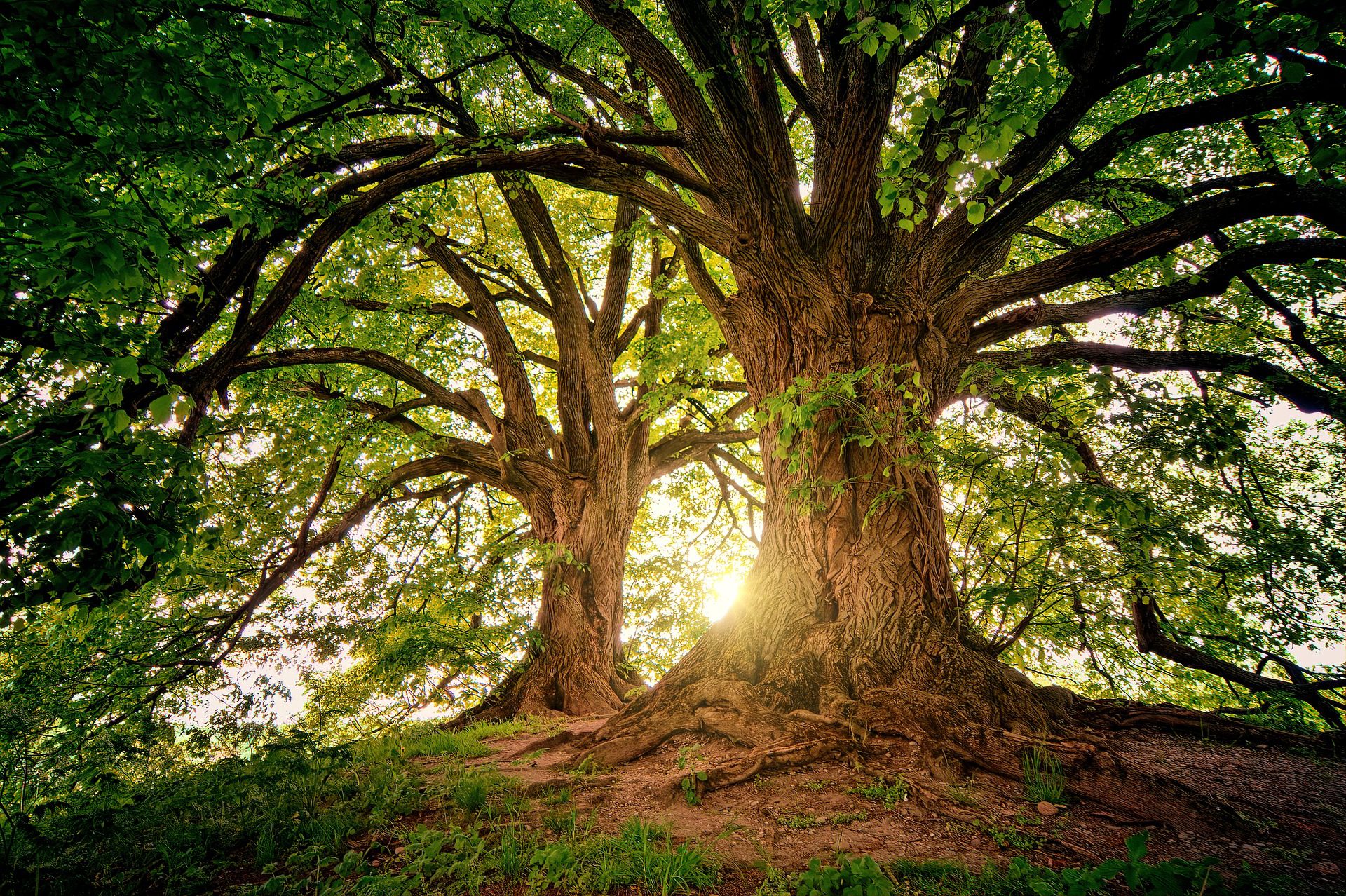
It is not a vision, not a light descending through oak canopy in the manner the old paintings suggest — golden, vertical, clean. No. It is a heaviness. A pull in the soles of your feet as though the ground beneath you had remembered your name, had been saying it for years into the dark of root-systems and aquifer and basalt, and you had only now — standing perhaps in some ordinary field, the wind carrying the iron-smell of coming rain and the grass bending with a patience that shames every human ambition — only now had you grown quiet enough to hear. That is how it begins. Not with ceremony. With silence. With the unbearable, aching recognition that the Earth is alive, that She has always been alive, that She has been breathing beneath your feet through every act of forgetting, every paved road, every turned-away glance — breathing still, breathing always, waiting with the long terrible patience of mothers for Her children to come home.
And so you come home. Or you begin to.
Table of Contents
The Bardic Stage: Learning to Speak What the Land Remembers
The first stage is the Bard's, and do not mistake it for something decorative — some lace-trimmed indulgence of verse and melody set apart from the real labor of devotion. The Bardic path is the path of the tongue learning what the bones already know. It is the oldest discipline because it is the most necessary: someone must remember, someone must carry forward, someone must refuse to let the stories of this living world dissolve into the white noise of a civilization that has trained itself to hear nothing but its own machinery.
In the family order — in this order, the one you are entering or considering or circling the way a fox circles a fire, drawn and wary in equal measure — the Bard's first task is not creation but listening. You go to the land. You go to whatever scrap of undomesticated earth you can reach — a creek-bed behind a housing development, a stand of pines on a ridge the developers haven't yet found profitable, the weedy margin of a farmer's field where the old grasses still hold, where the soil has not yet been salted with herbicide into mute compliance. You go there, and you sit, and you shut your mouth, and you wait.
What comes is not dramatic. It is the rustle of beetle-work in leaf litter. The particular pitch of wind through sycamore versus wind through pine — different, always different, the way every voice in a choir carries its own sorrow and its own delight. The mineral smell of creek-water over limestone. The faint vinegar-tang of decomposing oak leaves, which is the smell of the Mother recycling Herself, feeding Her own body back into the cycle so that new life can climb toward light. These are not metaphors. These are the Bard's first texts. These are the scriptures of Gaia — written not in ink but in cellulose and mycelium, in the chemical speech of root to fungus, in the slow sermon of erosion that shapes a valley over ten thousand years and asks nothing in return except that someone notice, that someone witness, that someone carry the tale.
The poets and musicians and storytellers of Druidry — those old Bards of the Celtic world who held positions of such authority that their words could halt an army mid-charge or mend a rift between warring clans — they understood something that the modern world has labored mightily to forget: that language is not separate from the world it describes. That to name a thing truly is to enter into relationship with it. That the act of creation — of poem, of song, of story spoken aloud in firelight — is not entertainment but sacrament, a giving-back of attention to a world that has given everything.
In your family order, the Bard serves the Mother by becoming Her voice in the human world. Not Her only voice — She speaks constantly, in the crack of ice expanding in granite, in the hawk's descending cry, in the particular way a thunderstorm builds from the southwest with that bruise-colored light that makes the trees seem greener than they have any right to be — but Her voice translated into the tongue of the species that has most grievously forgotten how to listen. The Bard learns the old stories: the myths of the land, the genealogies of rivers, the histories of forests that once covered this ground before the axes came. And the Bard learns to make new stories — not invented from nothing but drawn up from the deep well of attention like water drawn hand-over-hand from the dark, cold, and tasting of stone.
This is the first stage. This is where you begin. Not with power but with craft. Not with authority but with humility so profound it might, to the uninitiated, look like weakness — though it is the opposite of weakness, this willingness to kneel on wet ground and press your ear to the earth and admit that you do not yet know what She is saying, only that She is speaking, and that it matters more than anything else you have ever been asked to hear.


The Ovatic Stage: Learning to See What the World Conceals
There comes a time — and it cannot be rushed, cannot be scheduled into a curriculum, arrives instead the way grief arrives, suddenly and without the courtesy of warning — when the Bard's listening deepens into something else. The sounds become patterns. The patterns become meanings. The creek-bed that was simply beautiful becomes legible, and you begin to read in the arrangement of stones and the color of algae and the particular species of dragonfly hovering above the still pool a text as complex and consequential as any written by human hands. This is the threshold. This is where the Ovatic path begins.
The Ovate stands between worlds. That is the oldest way of saying it, and the truest, though the modern mind — trained to believe that only one world exists, the measurable one, the quantifiable one, the one that submits to instruments and spreadsheets — flinches from the claim. Yet the Mother's world is layered. She does not exist only in what can be weighed and catalogued. She exists in the dream of the seed before it splits its casing. She exists in the intelligence of the fungal network that connects forest trees in a web of chemical communication so vast and so sophisticated that the scientists who discovered it could only stand slack-jawed and reach for the word mother — the Mother Tree, they called it, the central node through which nutrients flow to the weakest, the youngest, the most in need. She exists in the turning of seasons, in the way autumn is not merely temperature-change but a great exhalation, a release, a letting-go that carries within it the specific, unsentimental wisdom that death is not the opposite of life but its deepest collaborator.
The Ovate learns to see these hidden architectures. In your family order, this means the study of divination — not as fortune-telling, not as the cheap parlor trick the skeptics imagine, but as the disciplined art of reading the Mother's moods through the signs She offers. The ogham staves, carved from the trees themselves — birch for beginnings, oak for strength, yew for the threshold between living and dying — these are not arbitrary symbols but condensed relationships, each one encoding a lifetime of observation about how a particular tree grows, what it endures, what it teaches by the simple fact of its existence. To cast the ogham is to ask the forest a question and to sit with whatever answer emerges, however ambiguous, however unsettling.
And healing. The Ovate heals — because the Mother heals, because healing is what living systems do when they are allowed to, when the obstacles are removed, when the intelligence of the body (of any body — human, animal, vegetal, mineral, the body of the Earth Herself) is trusted rather than overridden. The Ovatic healer in this order works with plants, with the medicines that grow from the same soil we walk upon, that have been refining their chemistry for four hundred million years while human medicine has existed for the blink of an eye. Herbalism is not nostalgia. It is not a retreat from science but an acknowledgment that the Mother has been doing science longer than we have, that the foxglove knew about cardiac glycosides before we had a name for the heart's electrical rhythm, that the willow bark carried salicylic acid in its cambium for millennia before a laboratory synthesized aspirin and called it progress.
The Ovate serves the Mother by standing at the threshold — between seen and unseen, between health and illness, between the living and the dead (for the dead are not gone; they are in the soil, they are in the water table, they are in the calcium of the bones of the fox that ate the rabbit that grazed the clover that grew from the grave). The Ovate's service is to refuse the lie of separateness. To insist, through practice and study and the unglamorous daily work of paying attention, that the web is unbroken — that what is done to the river is done to the body, that what is done to the forest is done to the mind, that the Mother does not distinguish between Her children because She cannot, because in Her economy there is no waste, no exile, no part that is not essential.
This is the second stage. It is harder than the first, because it requires you to see what you have been trained not to see — the connections, the correspondences, the terrible and beautiful wholeness of a world that industrial civilization has spent three centuries trying to dismember into sellable parts.
The Druidic Stage: Learning to Serve What You Have Learned to Love
And then — though "then" is the wrong word, for these stages are not a ladder but a spiral, and you will return to the Bard's silence and the Ovate's threshold again and again throughout your life, each return deepening what came before — you arrive at the Druidic path. The path of the Druid proper. The path of wisdom, which is not knowledge (knowledge is what you accumulate; wisdom is what accumulates you), and of ritual, which is not performance but the deliberate, bodily act of aligning human intention with the Mother's rhythms.
In your family order, the Druid serves Gaia through ceremony and stewardship and the most difficult labor of all: teaching. The Druid crafts the rituals that mark the turning of the wheel — the solstices and equinoxes, the cross-quarter days, the eight-fold cycle that tracks the Earth's tilt and orbit not as astronomical abstraction but as lived relationship, as a conversation between a planet and its star that has been ongoing for four and a half billion years and in which we are, all of us, participants whether we acknowledge it or not. To celebrate Imbolc is not to perform a quaint historical reenactment; it is to stand in February's raw cold and feel, in the first stirring of snowdrops through frozen ground, the Mother's refusal to remain silent — Her insistence that life will return, that the wheel will turn, that the darkness is not permanent however long the night.
The Druid studies philosophy and natural science and mythology and ethics — not as separate disciplines but as facets of a single inquiry: How shall we live on this Earth without destroying Her? This is the question that animates everything. This is the question that your family order exists to hold, to carry, to pass forward to those who come after. It is not an academic question. It is a question asked with dirt under the fingernails and rain in the hair and the ache of a body that has knelt on stone to plant a tree in ground that someone else poisoned — asked with the full knowledge that the answer, if it comes at all, will come slowly, will come incompletely, will demand more than any single lifetime can give.
Modern Druids in this order are stewards. They protect watersheds. They plant native species in the margins of a landscape that agribusiness has simplified into monoculture. They speak at council meetings with the quiet, relentless persistence of water wearing stone — not because they believe they will be heard (they have learned better than that) but because the Mother cannot speak at council meetings, and someone must. They teach children the names of trees, which is a revolutionary act in an age that teaches children the names of brands. They hold space for grief — ecological grief, the grief of watching species vanish and glaciers retreat and coral bleach white as bone — because grief unacknowledged becomes despair, and despair is the one luxury the Mother's servants cannot afford.
Protect online privacy from the very first click

Your digital footprint starts before you can even walk.
In today’s data economy, “free” inboxes from Google and Microsoft, like Gmail and Outlook, are funded by data collection. Emails can be analyzed to personalize ads, train algorithms, and build long-term behavioral profiles to sell to third-party data brokers.
From family updates, school registrations, medical reports, to financial service emails, social media accounts, job applications, a digital identity can take shape long before someone understands what privacy means.
Privacy shouldn’t begin when you’re old enough to manage your settings. It should be the default from the start.
Proton Mail takes a different approach: no ads, no tracking, no data profiling — just private communication by default. Because the next generation deserves technology that protects them, not profiles them.
The Interplay: The Spiral That Does Not End
These three paths — Bard, Ovate, Druid — are not a hierarchy. They are a braid. They are the triple spiral carved into the stones at Newgrange five thousand years ago by hands that understood what we are only now re-learning: that creation and perception and wisdom are not sequential achievements but simultaneous necessities, each one feeding the others the way mycorrhizal networks feed the trees they connect, quietly, underground, in the dark where the real work happens.
You will be a Bard who heals. An Ovate who sings. A Druid who, in the middle of crafting a solstice ceremony, is struck silent by the way firelight moves across the faces of those gathered — and in that silence, hears the Mother's voice again, as clearly as the first time, saying: You are mine. You have always been mine. Now do the work.
The first stages of becoming a modern druid in this family order — your order, if you choose it, if it chooses you, for the choosing goes both ways and always has — are stages of surrender. Not surrender as defeat but surrender as the river surrenders to the valley: finding the path that was always waiting, moving with the shape of the land rather than against it, carrying everything — silt and leaf and the small bright bodies of minnows — carrying everything downstream toward the sea, which is the Mother's deepest name, the place where all waters return.
Go to the land. Kneel. Listen. What you hear will break your heart. What you do with that broken heart is the beginning of your practice.