The bar smells like pine cleaner and Della's blackened catfish tonight,
..and the sound system is bleeding out the slow, cathedral moan of the Moody Blues — Nights in White Satin — that particular song that always feels less like music and more like grief made audible, like someone bottled the feeling of sitting in a dark room after something irreplaceable has gone quiet. Miguel is wiping down the bar top with the methodical patience of a man who has learned that the ritual of clean surfaces is its own kind of prayer. Ezra is cross-legged on their beanbag in the corner, blue hair catching the amber light like something electric trying to stay warm, their sketchbook open across their knees. Keira sits two stools down from where I've planted myself, a novel open and mostly unread in her hands, her thumb moving in slow circles over the spine.
I've been here maybe forty minutes. Long enough for the day's sediment to settle. Long enough for my shoulders to unknot from the particular concrete-hard tension that DevOps work builds in a body like slow calcification.
And then the door opens.
I heard it before I turned — the specific way the latch sounds when someone doesn't push through with any real authority, when whoever's on the other side is coming in because they have nowhere else to go and the bar is the only geography that makes sense when the world has taken something from you.
Elaine stood in the doorway.
Years of living make a woman look a particular way when she's broken, and it's nothing like the movies. It isn't dramatic. It isn't theatrical. It's the shoulders. It's the way she was holding herself like she was afraid that if she let go of the slightest muscle tension, she would simply pour out onto the floor and never reconstitute. She was wearing her good cardigan — the deep burgundy one she only pulls out when she wants armor — and her eyes were red-rimmed in a way that told me she'd been crying since the afternoon and had simply run dry somewhere around the parking lot.
Miguel saw her the same moment I did. His hands went still on the bar cloth.
She walked in like she was moving through water. No grand entrance, no wisecrack held aloft like a torch. Elaine without a wisecrack is like a church bell that's swallowed its own clapper — the shape of the thing is all there, but the sound that makes it real is just gone.
She sat on the stool beside me and didn't say anything for almost a full minute. I put my hand over hers. She let me.
Miguel set a rum collins in front of her — dark rum tonight, Gosling's, with a generous hand — without being asked.
Jingle is gone, she finally said. Not to me, exactly. More to the bar itself, to the middle distance where grief tends to live. Took him this afternoon.

The bar absorbed it. Ezra looked up from their sketchbook. Keira set her novel face-down.
He was seventeen years old, Elaine said, and her voice did something it almost never does — it caught. Seventeen years. That's — Christ, that's longer than some of my relationships.
She laughed, but it was the kind of laugh that lives right next to crying, fraternal twins sharing a face.
I'm so sorry, Elaine, I said, and I meant it the way you mean things when words feel insufficient but you offer them anyway because silence would be a cruelty.
She picked up the rum collins and drank half of it without stopping.
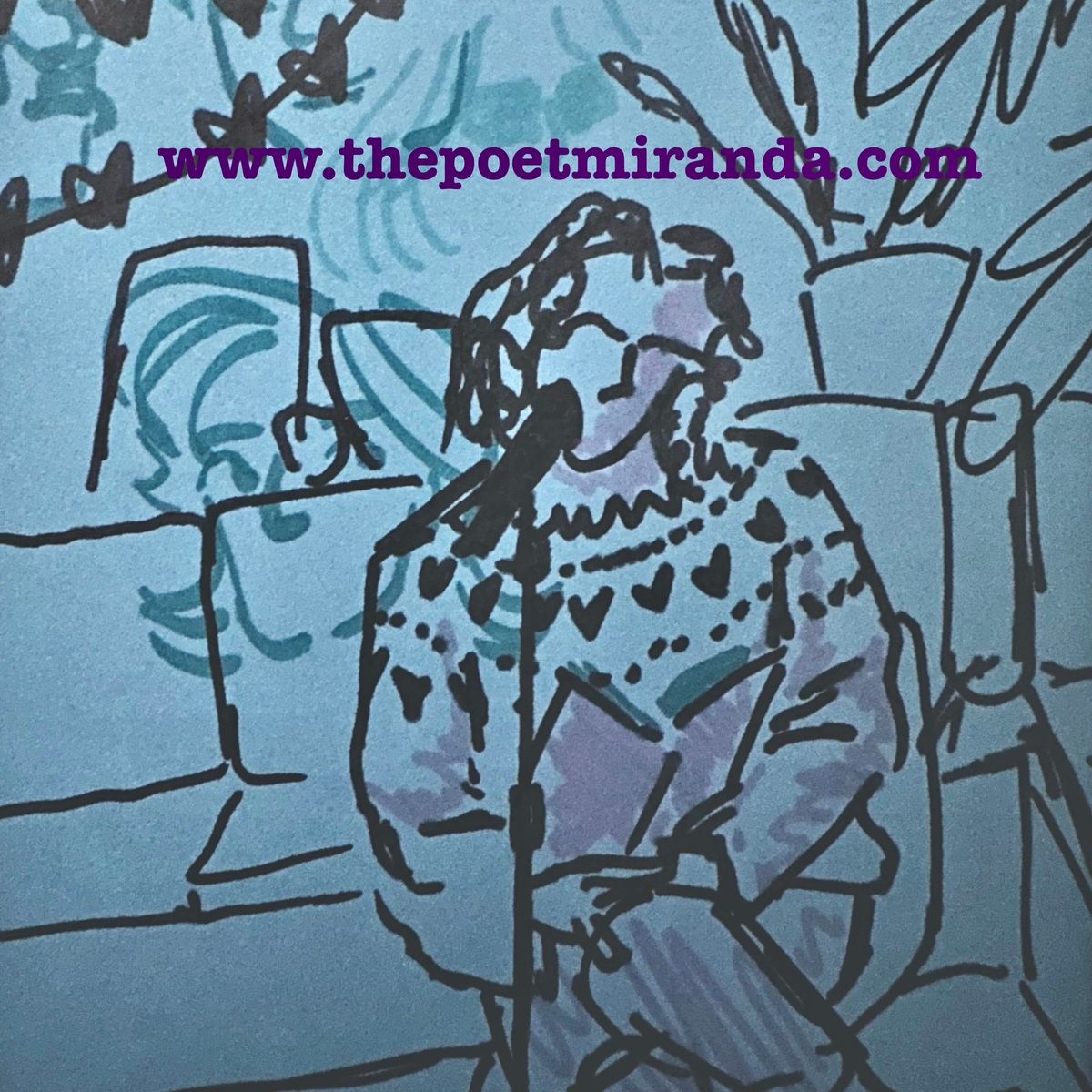
The door opened again and Sage came in carrying their bag of colored pens, followed closely by Miranda, who took one look at Elaine and slid onto the stool on her other side without a word, her hand finding Elaine's shoulder and resting there like it belonged.
Bubba came through ten minutes later, Remy just behind him smelling of cigarettes and outside air, and then Onyx, who paused in the doorway and read the room with the kind of quick emotional literacy that some people are born with and others spend decades failing to develop. They went to the far end of the bar, ordered their tea from Miguel — loose leaf, some oolong thing he keeps specifically for them — and settled in quietly.
Dani arrived last of the evening's crew, crystals and scarves and that particular energy she carries like a slow-burning coal, warm and constant. She sat beside Sage, glanced around, understood everything without being told.
The Moody Blues gave way to Fleetwood Mac — The Chain — bass line dragging itself through the room like something that had survived every storm and intended to keep surviving.
Seventeen years, Miranda said softly. Her voice does something particular when she's being gentle; it loses its edges, like a river stone worn smooth. That's a whole life. A whole shared life.

He used to sleep on my feet, my lap, where ever he could get comfy, Elaine said. Every single night. For seventeen years, I fell asleep with eight pounds of cat. Tonight I'm going to lie down and there's going to be nothing there. She paused. I don't know how to account for that kind of absence.
The body remembers, Miranda said. That's what nobody tells you. The body builds a whole architecture around another creature, and then when they're gone the architecture is still there, empty.
Remy pulled out a cigarette, turned it between his fingers but didn't light it — he never lights them inside, just needs the object when his hands are processing something. My mama had a dog named Biscuit, he said, in that slow bayou molasses of his. That dog died and my mama, mon Dieu, she grieved that animal harder than she grieved her own sister. We all thought she was crazy. Now I understand it completely.
It ain't crazy at all, Bubba said from his end of the bar, his voice that low tectonic rumble that seems to come up through the floor rather than across the room. The love is real. Loss of real love is real grief. Doesn't matter what species the love wore.
Miguel had come around to lean against the bar rather than behind it, which was how you knew he considered a conversation worth entering properly. He poured himself a small measure of something amber and held it but didn't drink.
I've said this before and I'll say it again, he said, the cruelest arithmetic in the universe is that dogs and cats get maybe fifteen, maybe twenty years if you're lucky, and we get seventy or eighty if we're careful, and that gap is just — it's just an open wound built into the whole arrangement.
I've thought about this, Sage said. They rarely open a sentence that way — it demands you wait for the rest — and I think the brevity might be part of the architecture. They don't know they're going to die. They don't waste a single day on existential dread. Every morning is entirely the morning. And we watch that, and we love that, and we carry the grief of it so they never have to.
The bar was quiet for a moment after that.
Ezra set down their sketchbook. That's the most beautiful and devastating thing I've ever heard and I need you to know I'm about to cry.
Honey, join the club, Elaine said, and this time the laugh was a little more real.


Miguel was back behind the bar, and he looked at me with that specific quiet question in his eyes that requires no words — the asking of it and the answering of it happening in the register that exists between us.
He reached under the bar and brought up a bottle I'd never seen before — small batch, Kentucky, label hand-lettered in the way that means someone cared enough to do it that way on purpose. He poured a generous measure into a rocks glass and slid it toward me.

Maker's Mark Private Select, he said. Finished in French Limousin oak. This one sat for eleven years before anyone touched it. Some things get better the longer they're left alone to become themselves.
I lifted it. The color was like amber trapped in early November light, warm and deep and unhurried. The nose was brown sugar and dried cherry and something almost like leather — the good kind of leather, worn-in and honest. When it hit my tongue it spread slow, caramel rolling into black pepper rolling into a finish that was long and soft and decided, like the last note of a song held just a measure past where you expected it to end.
Christ, Miguel, I said.
Yeah, he agreed.

Can I ask something? Gus said from the far end of the bar, and he had that tentative quality he still carries, that small-town-transplant carefulness of someone who isn't always sure whether his questions fit the room. But tonight the room was soft enough. I never had a pet growing up. My folks didn't allow it. Is it really like — people always say it's like losing a family member, and I always kind of figured that was an exaggeration.
Elaine looked at him with an expression that wasn't unkind. Fuck, Gus, it is not an exaggeration.
It's maybe the least adequate description that language has managed to produce, Miranda said. A family member is someone who shares your history. Jingle shared his daily life for seventeen years. The distinction between those things is smaller than people think.
Everyone knew Jingle, Elaine said, quieter. And today I had to be the one who decided. That's the other part nobody talks about. That we have to make the decision. We carry the mercy of it for them, because they can't ask for it themselves. She turned the rum collins glass in a slow circle. I keep thinking about whether he was scared. Whether I held him right.
You held him, I said. That's the whole of it. You were there.
Keira looked up from her novel then. She doesn't speak often in these moments — she has the good wisdom of knowing that presence is its own language — but when she does, it lands.
The fact that it hurts this much, she said, is the entirety of the testimony to how well you loved him.
Elaine looked at her. Her jaw worked for a moment. She nodded once, small and tight, the nod of someone receiving a truth they needed and didn't know how to ask for.
The Chain ended and Eye in the Sky by Alan Parsons came through the system next — that strange, floating, melancholy thing that always sounds like looking down at something from a great height — and Remy finally lit his cigarette, standing near the small ventilated back door that Miguel keeps propped for exactly this purpose.
The animals we love, Remy said, blowing smoke toward the crack of outside air, they fill up spaces in us that we didn't know were empty until they arrived. Then when they go, those spaces don't just go back to being nothing. They become shaped. Shaped like that specific creature.
Shaped like Jingle, Onyx said quietly from the far end, and it was so gentle and precise that several people turned to look at them. Onyx was looking at their tea. Their voice carries weight when they use it, the particular gravity of someone who spends most of their time feeling and relatively little broadcasting it. Every room in your apartment now has the exact shape of his absence in it. And that's grief, but it's also — it's also proof that he was real. That he mattered. The shape is the evidence.
Elaine set down her glass and pressed her fingers to her mouth for a moment.
Then: I sent a message earlier, she said, to Wendy. I said if you could figure out a way to make pets live forever, that would help, and other than that, send some good thoughts skyward for my old kitty Jingle.
I got it, I said. Every thought I have went up.
Mine are right now, Ezra said.
And mine also, said Miranda.
And it went around the bar like that — quiet and unhurried, each person offering theirs — until it had made the full circuit and come back to Elaine, who was sitting up a little straighter now, the rum collins almost gone, something shifted in the set of her face from shattered to held.
Not fixed. Nothing fixes this. But held.

Della came out of the kitchen with a plate she hadn't been asked to make — a small ramekin of her mac and cheese, the sharp cheddar kind with the breadcrumb top gone golden, comfort food in its most literal architectural form — and set it in front of Elaine without ceremony.
Eat something, she said, and went back to the kitchen.
Elaine looked at the mac and cheese. She looked at me.
She didn't even ask what happened, Elaine said.
She didn't need to, I said. She looked at you and she made the thing that fixes what can't be fixed.
God, I love this terrible bar, Elaine said.
It's a magnificent bar, I corrected her, and she almost — almost — managed a real smile.
Dani had been arranging her crystals in a slow semicircle on the bar top, not intrusively, just in the way she does — purposeful and quiet, like a person setting a table. She pushed a small piece of rose quartz toward Elaine. Elaine looked at it.
I don't have anywhere to put that, she said.
Put it next to his water bowl, Dani said. Or wherever it was. Until you're ready to move the bowl.
Elaine picked up the rose quartz. Her hand closed around it.
The bar held that for a moment — the specific weight of an old woman in a burgundy cardigan holding a pink stone in a basement that smells like catfish and bourbon and chosen-family love — and I thought about how grief is something that can only be survived in company, how we weren't built for the carrying of it alone, how the whole human project of choosing each other over and over is really just the project of building enough hands that no single pair has to hold the unbearable by themselves.

Queen came through the system — Who Wants to Live Forever — and I felt it in my chest the way I always do, because Gizmo used to belt that song in the car, her whole small body throwing itself into the high notes with the complete unselfconscious commitment of a child who doesn't yet know that caring too much can be used against you. I sat with it. I let it move through me.
Elaine heard it and her eyes went somewhere private.
Appropriate, she said.
Yeah, I agreed.
We listened to it together, all of us in that basement, in that amber light, in that pocket universe where the broken things come to be witnessed rather than repaired. Jingle had walked across a keyboard once — Elaine told us this, unprompted, her voice loosened now by rum and company — and deleted an entire email that she'd spent forty-five minutes composing. Had looked at her with the complete serenity of a creature who understands that his presence is not optional. Had turned away and gone to sleep.
He gave exactly zero shits, she said, and the bar laughed — really laughed — and Elaine laughed with us, and the laugh was wet at the edges but it was real, it was fully real, and that is sometimes all we can ask for at the end of a day like this.
And somehow, this made it all ok. For a while.
"To be nobody but yourself in a world which is doing its best, night and day, to make you everybody else — means to fight the hardest battle which any human being can fight; and never stop fighting."
— Audre Lorde, Sister Outsider
Tonight wasn't about fighting the world's definitions, but it was about something adjacent to that — about refusing to let grief be diminished by the world's insistence that animals are lesser, that their loss is smaller, that the architecture they build inside us doesn't deserve the full weight of mourning. Elaine fought for Jingle's memory tonight simply by walking through that door and letting us witness it. We fought back by not looking away. That is, I think, the whole of what chosen family is for — not to take the grief, which cannot be taken, but to distribute it across enough hands that none of us has to carry it in isolation. Jingle's paws left a permanent impression. We were there to confirm that the impression was real.
Editor’s Note: My friend Elaine is hurting. And she is feeling loss. And I just want to hug her and make it better. But I can’t. So I write her into my stories to show that I care, and I worry about her. And I hope she knows.

