The condensation on the bartop had pooled into something that looked like a topographic map of a country that doesn't exist yet, and my fingers were tracing its coastline before I realized I'd sat down. The bass from downstairs was doing that thing it does in March, when the humidity hasn't committed but the walls have already started to sweat like they know something the calendar doesn't — a low, boneless throb that you feel in the jaw before you hear it in the ears. Heart's "Barracuda" was shredding through the speakers, Ann Wilson's voice a serrated blade wrapped in velvet, and the sound system was pushing it at a volume that said Ezra had been here since five and had opinions about the evening's trajectory.
The alley door had been propped open with a brick — someone's concession to early spring. The air that came through smelled of wet asphalt and magnolia buds not yet committed to opening, and underneath it the permanent ghost-scent of the basement: old brick, spilled bourbon seasons deep, and the mineral tang of a space that has been cried in enough times to change its chemistry.
I could hear Sarah before I could see her. That was new. Sarah's voice doesn't carry. Sarah's voice does precisely what Sarah instructs it to do, which is travel the exact distance to its intended recipient and no further, like a legal document served to a specific address. But tonight her voice was filling the back corner near the pool table with a warmth that had texture, that had weight — the kind of sound you feel against your skin the way you feel sunlight through a window you forgot was open.
Miguel materialized with a glass already in his hand before my ass found the stool.
Sit, he said. You look like Tuesday hit you with a pipe wrench.
Tuesday hit everyone with a pipe wrench, I said, but I took the stool and I took the glass. The liquor inside was the color of dark honey held up to a firelight, and the nose on it was immediate — burnt sugar and dried cherry and something leather-deep, something that smelled like the inside of a saddlebag left in a barn through three seasons.
Blanton's Single Barrel, Miguel said, watching me the way he does when the pour matters. The bottle with the jockey cap on top. Found this one in the back of the distributor's truck. They weren't even supposed to have it, but life provides, Mom. Life provides what you need when the world's trying to steal what you've got.
The first sip landed like a fist wrapped in silk. Caramel so deep it had a geological quality — layered, tectonic — and then the rye spice came through, not sharp but insistent, a persistence that reminded me of people who refuse to leave rooms they've been told they don't belong in. The finish was long and warm and it tasted, absurdly, like patience.
What's happening over there? I tilted my chin toward the back corner where Sarah held court.
Miguel grinned. That particular grin he does where his whole face opens up and the boy inside the man peeks out, irrepressible, delighted by something the adults haven't caught up to yet.
She's been here since four, he said. Four, Mom. Sarah got here before I finished cutting limes. She's been talking for two hours and she hasn't said anything that makes sense and everything she's said has been the most beautiful thing I've heard this month.
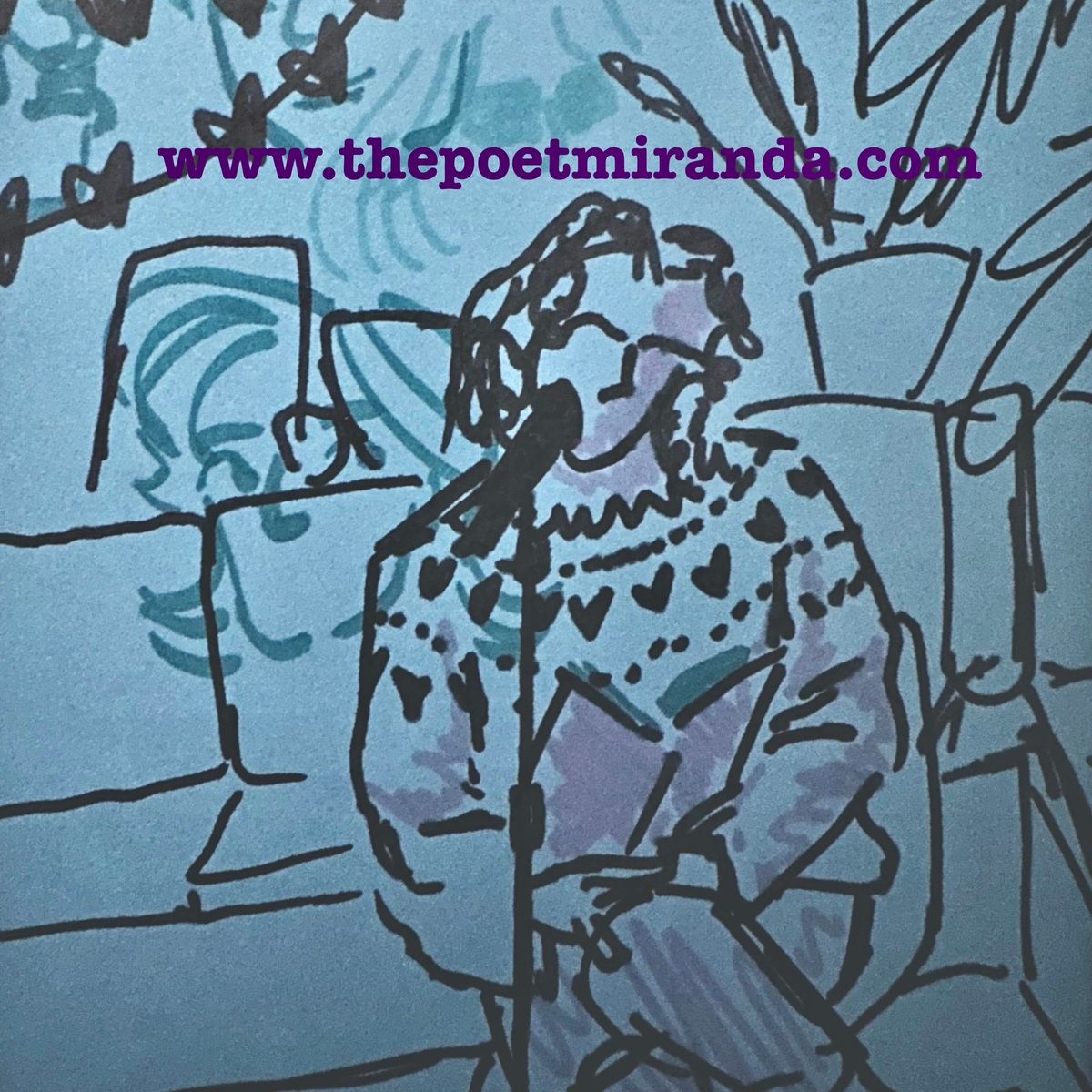
The corner had arranged itself around Sarah like a solar system around a new star. Ezra was cross-legged on their beanbag, sketchbook abandoned face-down on the floor — first time I'd seen that in three years. Their blue hair caught the overhead light and turned it electric. Phoenix perched on the arm of the couch in forest-green scrubs, purple-and-silver hair piled into intentional chaos, piercings catching light like signal fires. River sat beside Phoenix, one hand on Phoenix's knee with the unconscious possessiveness of someone who has stopped needing to think about whether their hand belongs there, ruby ring catching every photon in the basement. Dani had pulled a chair so close to Sarah that their knees nearly touched, scarves pooling around her like spilled silk, crystals refracting the overhead light into tiny rainbows nobody was noticing because Sarah was talking.
And Sarah was talking.
Not the way Sarah usually talks — measured, philosophical, each word weighed on some internal scale before being permitted into the atmosphere. Tonight Sarah was talking the way rivers talk when the ice breaks. Messy. Overlapping. Circling back. Starting sentences she didn't finish because the feeling outran the language and she had to stop, breathe, laugh at herself, and try again from a different angle.
I brought my Blanton's and settled into the booth's periphery. Keira was already there, book in lap but closed, spine up, thumb holding a page she wasn't going to need. Her eyes found mine: you're going to want to hear this.
Start over, Ezra demanded. Mom's here. She needs to hear the part about the breathing.
I'm not starting over, Sarah said, but there was no edge in it. The blunt authority usually running through her voice like rebar through concrete had been replaced by something almost — and I'm choosing this word with full awareness of how absurd it sounds applied to Sarah — tender. The breathing part isn't a part. The breathing was the whole thing.
Then tell her the whole thing, Phoenix said, leaning forward with the particular hunger of someone who has recently learned what it means to be completely claimed by another person and recognizes the symptoms.
Sarah looked at me. There was color in her face — not a blush but a warmth living underneath her skin I'd never seen. Sarah's complexion runs toward granite. Tonight it ran toward something igneous.
I told you I went to see them, she said.
You told us approximately nothing, Dani corrected gently, which for you constitutes an entire memoir.
Sarah laughed. Actually laughed — not the sharp, analytical exhalation she usually produces when something meets her criteria for humor, but an actual laugh, head tipping back, shoulders loosening, the sound filling the corner like warm water rising to the rim.
Having finally arrived, she said, and then stopped. Looked at the table. Picked up her drink — bourbon, neat, the glass held the way she holds everything, like she's already analyzed its structural integrity — and set it down without drinking. The ordeal was over. I don't mean the travel. The travel was fine. I mean the ordeal of — of being away from them. Of existing in a space that doesn't contain them. Balance restored. I could breathe again. Embraces, and sleep.
The way she said embraces — plural, weighted, her mouth lingering on the word like it contained a flavor she wasn't ready to swallow — made Ezra's pencil-stained hand fly to their own chest.
Oh, Ezra said. Just: oh. A syllable that held an entire cathedral.
The TV above the bar was muted but alive, cycling through news footage nobody was watching: men in suits at podiums, documents held for cameras, that particular C-SPAN quality of institutional violence wearing its most professional face. Remy, settled in his usual spot near the window with an unlit cigarette held between his fingers like a rosary, had been scrolling his phone with an expression that would curdle milk. He looked up from his screen, caught Sarah's sentence, and the expression shifted. Softened.
Cher, Remy said, just loud enough to carry, you tellin' it or you livin' it? Because from where I'm sittin', it look like both.
Both, Sarah said, and the admission cost her something visible. Her jaw worked. Over the days that followed — and I stayed, I extended, because I wasn't ready to leave and I don't know that I would ever be ready to leave — there was... discussion. Understanding being built. Not assumed. Built, the way you build a foundation when you actually intend for the structure to hold. Evolving and growing.


Bubba came in from the alley with rain on his shoulders that hadn't been there twenty minutes ago. He shook himself once — a massive tectonic movement sending droplets across the nearest tables — and settled into his chair by the window across from Remy with the gravitational certainty of a mountain returning to its range. His hand found Remy's forearm, briefly, carrying thirty-three years of history in its fingerprints, and Remy's free hand covered it for one beat before both men returned to their positions. Sentinels. Witnesses.
Della's kitchen was producing sounds — aggressive sizzle of something hitting a cast-iron skillet heated past reasonable patience, percussive chop of a knife through onions at a speed suggesting the onions had personally offended her. The smell coming through was blackened catfish and garlic and something green and furious.
Brandon arrived while Sarah was mid-sentence, gin and tonic materializing from Miguel's hands. His notebook was out but his pen was still, and his hands — those animated, never-quiet hands — were motionless. When Brandon's hands stop moving, the world should pay attention.
Supertramp's "The Logical Song" came through the speakers, and the irony was so precise it felt staged — Roger Hodgson singing about being taught to be sensible and logical and responsible while Sarah sat in a basement bar dismantling every sensible, logical, responsible wall she'd ever constructed around her own heart.
I want to understand something, Phoenix said, leaning forward until their piercings caught the light and scattered it. When you say 'discussion and understanding being built' — you mean with them. Your person.
Sarah's mouth did something complicated. A smile that wasn't quite a smile. An admission that wasn't quite an admission.
I mean with the people, she said carefully, who matter to me. The ones I am choosing to build with.
The plural landed in the room like a stone in still water. Ezra caught it first — whole body rigid, blue hair practically standing on end, mouth opening and closing twice. River caught it next, nurse's precision seizing the diagnostic detail — the people, not the person; the ones, not the one — and their hand tightened on Phoenix's knee. Phoenix caught it from River's hand. Dani caught it from the air itself.
Sarah, Ezra breathed. Sarah, are you —
I am not answering that question, Sarah said immediately, the blunt authority returning for exactly one sentence like a steel gate slamming down and then, impossibly, lifting again. I am telling you that I have discovered — been shown — that the heart is not the goddamn finite resource I was taught it was. That the capacity for — for care. For connection. For the kind of attention that changes the molecular structure of a person. That capacity is not —
She stopped. Pressed her palms flat against the table. The booth was so quiet I could hear Remy's unlit cigarette rolling between his fingers.
Love has always felt like sacrifice, Sarah said, and her voice cracked on the word sacrifice like a bone breaking clean. My whole life. Every relationship. Every connection. Love meant giving parts of yourself away until there wasn't enough left to function on. And I'm learning — they're teaching me, all of them, every single one of them — how wrong that was.
There it was. All of them. Every single one of them. Not hidden. Not announced. Just said, the way you say something true when you've finally stopped believing it needs to be defended.
Ezra made a sound that could only be described as a full-body vibration of joy. Not a word, not a squeal — a frequency, a resonance, their entire being humming with recognition and delight. Phoenix grabbed River's hand and squeezed until the ruby ring must have bitten into both their fingers. Dani pressed her own hand to her heart and the crystals on the table shivered.
Don't, Sarah said, pointing at each of them in turn. Don't you dare make a thing of it. I swear to whatever philosophical framework you want to invoke —
Too late, River said, and their voice carried the gentle authority of someone who has held dying patients and knows exactly how sacred the opposite looks. It's already a thing. You made it a thing by being brave enough to say it out loud.

The news crawl on the muted television scrolled something that made Bubba's jaw clench from across the room. I couldn't read it from where I sat but I could read Bubba — the way his shoulders squared, the way his hands went flat on his thighs, the particular stillness that descends on a man who grew up Black and gay in seventies Georgia when he sees the machinery of disenfranchisement rotating its gears in real time. Remy leaned over and read whatever Bubba's phone was showing him, and the Cajun's face went through three distinct phases: confusion, recognition, rage. The rage settled into something colder. Something bayou-deep and patient and infinitely more dangerous than heat.
Fifty years, Bubba said, his voice a tectonic rumble that carried across the bar despite being barely above a murmur. Man said it himself. Out loud. Into a microphone. Fifty years of never losing a race.
Mon Dieu, Remy muttered, thumb scrolling, cigarette forgotten. They want your birth certificate to register. Your actual birth certificate, cher. Like your existence needs a receipt.
Brandon looked up from his notebook. Twenty-one million, he said quietly. ***That's how many Americans can't easily access those documents. People who changed their names. People who — *** He stopped. Looked at me. The unspoken list hung in the air like smoke: trans people, married people, escaped people. People whose names are not the names they were given because the names they were given were cages.
My throat — the one crushed to seventy percent capacity by my brother's hands, the one that aches when I talk too long or say things that matter — tightened around something that wasn't bourbon.
Keira's hand found the small of my back. Not a touch, exactly. A presence. That warmth of kindness that only I could understand, and love. Yes, I said love.
The Clash's "Know Your Rights" exploded through the speakers — Remy had queued it from his phone — and Joe Strummer's snarl filled the basement with a rage that felt constitutional, that felt like the sound the building itself would make if buildings could scream.
They're not even hiding it anymore, Phoenix said, voice shifting from tenderness to something harder, the particular edge of a twenty-two-year-old who was kicked out and beaten in an alley and knows exactly what it looks like when systems decide you don't exist.
Always has been, Bubba said. They just used to whisper it in back rooms.
Sarah had gone still in her corner, and I watched the two Sarahs exist simultaneously — the one cracked open by love five minutes ago and the one who has spent forty-two years sharpening her mind into a weapon against exactly this kind of institutional violence.
The pattern, she said, and her voice had returned to its judicial precision, is always the same. Restrict the franchise. Criminalize the administrators. Hand the verification to the people who have already demonstrated they can't be trusted with it. And then call it patriotism.
Call it whatever the fuck they want, Remy said, it's still a poll tax wearing a flag pin.
Della emerged from the kitchen carrying two plates of blackened catfish with collards and cornbread that smelled like an argument God was having with the devil over who invented the South. She set them in front of Bubba and Remy without ceremony.
Eat, she said, and disappeared back into the kitchen.
Phoenix leaned back into River, and River's arm came around them. The ruby ring caught the overhead light.
Can we go back, Ezra said, and their voice had a careful quality, a deliberateness that meant they were about to ask something they knew was delicate. To the part about — Sarah. The part where you said you discovered you were wrong about love. About sacrifice. About —
About capacity, Sarah said.
About capacity. Ezra nodded. Because I want to understand something. You spent — how long with your person? Persons?
Sarah's eyes narrowed. Not with threat — with the recognition that the word she'd used had opened a door she couldn't close, and the astonishing discovery that she didn't want to.
Five days, she said. Three full. Two partial. And if it weren't for obligations — my child returning — I would have stayed longer. I would have stayed indefinitely. I wasn't ready to leave. I don't know that I would ever be ready to leave.
Because there was enough, Dani said softly. Enough of everything. Enough attention. Enough care. Enough room.
Sarah looked at Dani and something in her face broke open like a geode, all crystal and light inside where there had been gray stone.
The most exquisite exploration of emotion and sensuality and discovery of desire, Sarah said, and each word fell from her mouth like something she had been carrying in a locked room and had finally found the key. An emotion I thought was lost to me. I thought it was dead. I thought that part of me had been amputated by twenty years of learning that love meant being the person who holds everyone else together while your own seams dissolve. And they showed me — each of them, in their own way — that it wasn't dead. It was dormant. It was waiting for someone to be careful enough to wake it without breaking it.
Each of them, in their own way.
The silence that followed was packed with understanding, with the specific joy of watching someone discover that the container they'd been given for their heart was the wrong shape and the right ones come in multiples.
Genesis — "Follow You Follow Me" — came through the speakers like the universe had decided to editorialize.
Sarah, Phoenix said, and their voice was thick with something enormous, that is the most punk rock shit I have ever heard come out of your philosophical stoic mouth.
It's not punk rock, Sarah said, but she was smiling — actually smiling, her face transforming into something younger. It's just — true. Connections being nurtured that I never want to neglect. I'm striving to express my commitment. To all of it. To every part of what this is.
And you're not going to tell us who, River said, and it wasn't really a question.
I've said too much already, Sarah said, picking up her bourbon and actually drinking it this time, a long pull that put color back in her face from a different source. Any more would be telling too much. Even this might be too much. But it's what I'm willing to risk sharing.
Willing to risk, Ezra repeated, turning the phrase over like a jeweler examining a stone. Sharing love isn't a risk, Sarah. It's a —
It's always a risk, Sarah said, and the steel was back, but warm now, tempered by everything she'd just admitted. Missteps hurt. But challenges are something you work through together even when it's difficult. Even when — especially when — the thing you're building doesn't look like what anyone else would build. Figuring out what moving forward looks like.

Brandon had been writing. His pen had started moving somewhere during Sarah's third confession and hadn't stopped, capturing something that would probably become a published essay while I sit on forty rejection letters. Some stories need multiple witnesses.
He looked up and his face held something I couldn't name. Not envy. Something closer to relief — a gay man who has spent his adult life looking for his one true husband discovering that love has more floor plans than he'd been shown.
You know what nobody talks about, Brandon said, his voice carrying the performative lightness that means something heavy is underneath, is the conversion of it. The way we're all supposed to want the same shape of love. One person, one structure, one story. And if you deviate from the blueprint —
They build an industry to fix you, Bubba finished, and his voice held the weight of a man who remembered when the fixing involved electricity and restraints and the word therapy used as a synonym for torture.
The bar went somewhere darker then. The news crawl had shifted — different footage, someone being interviewed, a face I half-recognized from the expression of a person recanting something they'd spent decades profiting from. Remy was reading his phone and his jaw was doing the thing Cajun jaws do when rage goes past hot into that delta-cold patience.
Seven hundred thousand, Remy said, not looking up. That's how many of us went through it. Conversion horseshit. And fifty-seven thousand children — children, cher — still facing it before they turn eighteen.
And it took a straight man admitting he was wrong to move the needle, Brandon said, and the bitterness in his voice was particular, was precise, was the bitterness of a writer who understands that the people who do the suffering are rarely the ones who get to narrate the resolution.
I thought of John. The blank slate of his face across the courtroom. My leg — titanium and stubbornness, aching because rain was coming, the sky above the basement making its intentions known through my femur — pulsed with the memory of trying to beat the woman out of myself in a fighting ring because someone convinced me that's what healing looked like.
The harm was happening to other people's children, Keira said from her chair, and her voice carried the scalpel quality that means she's saying something that needs to land surgically. That's always the math. It's tolerable when it's someone else's kid. It becomes a crisis when it's yours.
Phoenix flinched. Not dramatically — just a microtremor, the body remembering what the mind has filed under processedbut the nervous system knows better. River's hand tightened on their knee. The ruby ring pressed into skin.
Pink Floyd's "Wish You Were Here" drifted through the speakers, and my hand froze on the glass. That opening acoustic ache — Gilmour reaching through a telephone line to touch someone who isn't there anymore. Gizmo used to sing this one in the passenger seat, knees pulled up, her voice doing things to that melody that made the highway disappear. My eyes burned. I blinked. The blink lasted one full measure — too long, long enough for Keira to notice, for her hand to return to the small of my back with the steady pressure of someone who cannot fix this wound but will stand guard beside it.
Mom? Ezra said, soft.
I'm here, I said. Just — the song. Keira nodded at me , again showing her hand in the loving way that she showed it, touching the small of my back to remind me. I didn’t need a reminder. But I got one anyway
Ezra themselves nodded. They understood. They all understood. That's the particular cruelty and grace of chosen family — they know which songs are loaded weapons and they hold their breath when the trigger gets pulled.
The rain had committed. Della came out with quesadillas, cheese pulling in strands that caught the light, and set them between Sarah and the youngers without a word. The kitchen as first responder.
Sarah ate with the hunger of someone who'd spent the week being fed by hands that care about garlic and pasta water, and finds self-feeding devastating by comparison.
I have a question, Dani said carefully. About the leaving. You said you weren't ready. And you said — learning what healthy communication looks like. What not being the emotional regulator really looks like.
Sarah set down her fork.
It means, she said slowly, that for the first time in my life, I am in spaces where my job is not to manage everyone else's feelings at the expense of my own. Where I can — fall apart. Where falling apart is not a failure of my role but a — a thing that happens, and people catch you, and you catch them, and nobody keeps score.
That's not just one person doing that for you, Phoenix said, and the words were gentle but the precision was River's — diagnostic, specific, naming the thing without judgment. That's a community. That's a —
Choose your next word very carefully, Sarah said, but she was smiling again, that new impossible smile, and the warning had no teeth.
— a constellation, Phoenix finished. That's a constellation, Sarah. And that's beautiful.
Sarah pressed her lips together. Looked at the ceiling. Looked at me.
Wendy, she said. Tell them to stop being perceptive. It's deeply inconvenient.
I raised them this way, I said. Inconvenient perceptiveness is a family trait. I didn’t even bat an eye, I just continued drinking.
The booth laughed — Ezra's bright peal, Phoenix's startled bark, River's quiet rumble, Dani's warm cascade — and the sound mixed with rain on the stairs and Della's kitchen and the taste of bourbon that had everything to do with watching someone discover their heart has rooms they didn't know were there.
Bubba raised his glass from across the room. Didn't say anything. Didn't need to. Remy raised his beside it. Two men who had loved each other for thirty-three years before admitting it, honoring a woman who was learning the same lesson in a different shape.
AC/DC's "You Shook Me All Night Long" came through the speakers and the mood cracked open into something lighter, something that felt like permission to breathe after holding it through the heavy parts. Ezra started sketching again — furiously, their pencil attacking the paper with the intensity of someone capturing something before it evaporates. Phoenix nestled into River. Dani adjusted her crystals.
And Sarah sat in her corner booth with her bourbon and her rumpled flannel and her new, impossible, uncategorizable smile, and said nothing more about who or how many or in what configuration, because the shape of love is not a public document and Sarah has always understood that the most important truths are the ones you protect by refusing to explain them.

The night wound down the way basement nights do — not with closure but with fatigue's gentle insistence. Remy had finally pocketed the unlit cigarette. Bubba's hand rested near Remy's with the casual permanence of geological formation. Brandon was still writing.
Miguel was drying glasses with a care that made each one look consecrated. He caught my eye.
She's going to be okay, he said, tilting his chin toward Sarah.
She's going to be more than okay, I said. She's going to be the thing she was always supposed to be.
And what's that?
I thought about it. About Sarah's face when she said embraces, and sleep. About each of them falling from her mouth like a prayer she hadn't known she was composing. About twenty-one million Americans whose names are not the names they were given. About seven hundred thousand queer people fed through a machine designed to erase them. About a man bragging into a microphone that he'd rigged the game for fifty years. About my daughter singing Pink Floyd in a car that doesn't exist anymore.
About rain on basement stairs. Catfish and collards. The warmth of a hand on the small of my back from a woman who chose me. A basement full of broken, beautiful, furious people who keep showing up because the alternative is being alone in a world that has announced, into microphones, that it intends to make them disappear.
Loved, I said. She's going to be loved. In whatever shape that takes.
Miguel smiled. Poured himself something. Raised the glass toward the room.
Outside, the rain continued. The magnolia buds held their positions. The sticker on the alley door — Family Only — ran with water but didn't wash away.
"The moment we choose to love we begin to move against domination, against oppression. The moment we choose to love we begin to move towards freedom." — bell hooks, All About Love
There are nights the Sanctuary teaches me something I should have learned decades ago. Tonight it taught me that love is not a pie. It is not diminished by division. Sarah sat in a basement bar with a rumpled flannel and bourbon on her breath and said the word them like it was a revolution, and it was. Every queer person told their love is wrong has been told, underneath, that love itself is scarce — that deviation from the approved distribution model constitutes theft. But love is an aquifer, not a well. It doesn't run dry when more people drink from it. It runs deeper. And the people trying to restrict the franchise — of voting, of existing, of loving — aren't afraid there isn't enough. They're afraid there's too much, and the abundance will expose the poverty of everything they've built their power on. Sarah learned it in a kitchen where the garlic mattered and the hands were soft and the sleeping space was shared and the heart turned out to have rooms she'd nailed shut years ago that someone, gently, without asking permission, opened.

