Content Warning: This story contains references to anti-transgender violence, familial abuse, death by firearm, and suicide. It is rooted in real events and real grief. The trans community carries its dead not as statistics but as names — as people who laughed and argued and changed their hair and played Minecraft and believed, stubbornly, impossibly, that the world could hold them. This story exists because Katie Newhouse existed, and because the silence surrounding how we lose our people — whether by someone else's hand or by the narrowing of every door until the only one left opens onto nothing — is itself a violence we refuse to participate in any longer. If you or someone you know is struggling, the Trans Lifeline is 877-565-8860, and the 988 Suicide & Crisis Lifeline is available 24/7. You are not alone. You were never supposed to carry this alone.
The condensation on the glass found my knuckles before I found the glass.
Miguel had already poured it — set it on the bartop while I was still navigating the last three stairs, the ones where the railing goes thin and the brick sweats in March, that particular Georgia-March sweat where winter refuses to concede but spring has already moved its furniture in. The amber caught what light the basement offered and held it like a closed fist. Balvenie. Fourteen-year Caribbean Cask. I could smell it from four feet away — rum-barrel sweetness laid over something older, something that had spent more than a decade learning patience in Scottish dark.
I didn't ask how he knew.
Miguel always knows when the nineteenth arrives. The date sits in his bones the same way it sits in mine, a seismic tremor so low-frequency most people mistake it for their own heartbeat. He didn't say anything. Just set the glass down, wedding ring clicking against the wood, and went back to polishing a tumbler that was already clean. His hands needed occupation. I understood that. My hands needed the glass.
The first sip opened like a corridor — honey first, then toffee, then a finish that tasted like the inside of a church pew if the church had been built by people who actually meant it. The rum cask gave it warmth where the Scotch wanted austerity. Something that insisted on sweetness even when the oak said no.
Four years.
The number sat in my chest like a fist-sized stone, smooth from handling but no lighter for the wear. Four years since a Saturday evening in a subdivision called BridgeMill, in Canton, thirty-some miles north of where I sat, where a man whose name I will not grant the dignity of repeating picked up a firearm and erased the brightest goddamn smile in Cherokee County. Then erased himself. As if the second shot cancelled the first.
It doesn't.
Nothing cancels the first.
Onyx was already here — that was the tell. Onyx doesn't arrive early. Onyx drifts in like weather. But tonight they were seated at the far end of the bar, hands wrapped around a ceramic mug of loose-leaf chamomile, steam rising past their face. Papers spread in front of them. A pen. Their eyes doing that thing — that I-am-here-but-I-am-also-four-years-and-thirty-miles-north-of-here thing.
Because we knew Katie. Both of us. Not the way the news knew her — not as statistic number eight in a year that would count to fifty-seven. We knew the girl. Onyx found her online first, through Minecraft servers and Discord channels. I found her through the community networks, the whispered introductions trans women make for each other — there's a kid in Canton, she's bright, she's struggling, keep an eye. Both of us carrying our separate halves of the same person in our chests for four years now, like lockets that only open on this date.
I set my glass down and walked to the end of the bar. Sat on the stool next to Onyx without asking, because some permissions are granted by the date itself.
Hey.


One word. Onyx's eyes lifted from the papers — poems, I could see now, handwritten in that cramped urgent script, ink pressing hard enough to dent the page beneath — and something in their face rearranged. Not a smile. The specific expression of someone seeing the one other person who carries the same dead girl in the same unhealed pocket of their chest.
Hey, Mom.
The Moody Blues were seeping through the speakers — Nights in White Satin, that orchestral ache Justin Hayward wrote when he was nineteen years old, the same age Katie was, the same impossible age where the world is supposed to open and instead it —
I took another sip. Let the Balvenie burn its gentle path.
Ezra appeared from near the beanbag throne, blue hair electric under the refurbished lighting, and dropped onto the stool on my other side with the controlled quiet of someone who knows what day it is but isn't sure what's allowed.
You two okay?
No, Onyx said, without looking up. But that's the right answer today, so.
Ezra's hand found the bartop between us, not reaching for either of us, just placing itself there like a bridge nobody had to cross yet. The gesture was enough. I put my hand over theirs and squeezed once and let go.
Keira's book closed. I heard it from across the room — the particular sound of a hardcover shutting with intention. She crossed the basement floor and stood behind my stool, close enough that I could feel her warmth without contact, and her fingertips found the back of my neck — barely there, a touch so light it could have been imagined.
I'm right here, she said. The exact volume required to bypass my defenses.
She knew Katie. Not as well as Onyx, not as well as me, but she knew the name, knew the date, she just knew. Keira understands the architecture of grief better than I do — knows which rooms I'll wander into, which doors I'll try to lock.

Della came out of the kitchen carrying a plate nobody ordered.
Empanadas. The ones she makes when words won't do — ground beef and sofrito and a crust she crimps with a fork like she's sealing envelopes full of things too important to say out loud. She set the plate between me and Onyx without ceremony.
Kitchen's open if anyone needs it, she said, which was Della for I love you and I can't fix this so let me do the one goddamn thing my hands are good for.
Sarah was at her usual spot — flannel pressed to regulation, boots authoritative against concrete — and she caught my eye and held it. Didn't nod. Didn't look away. Just held it the way you hold a rope when someone's at the other end and the current is pulling.
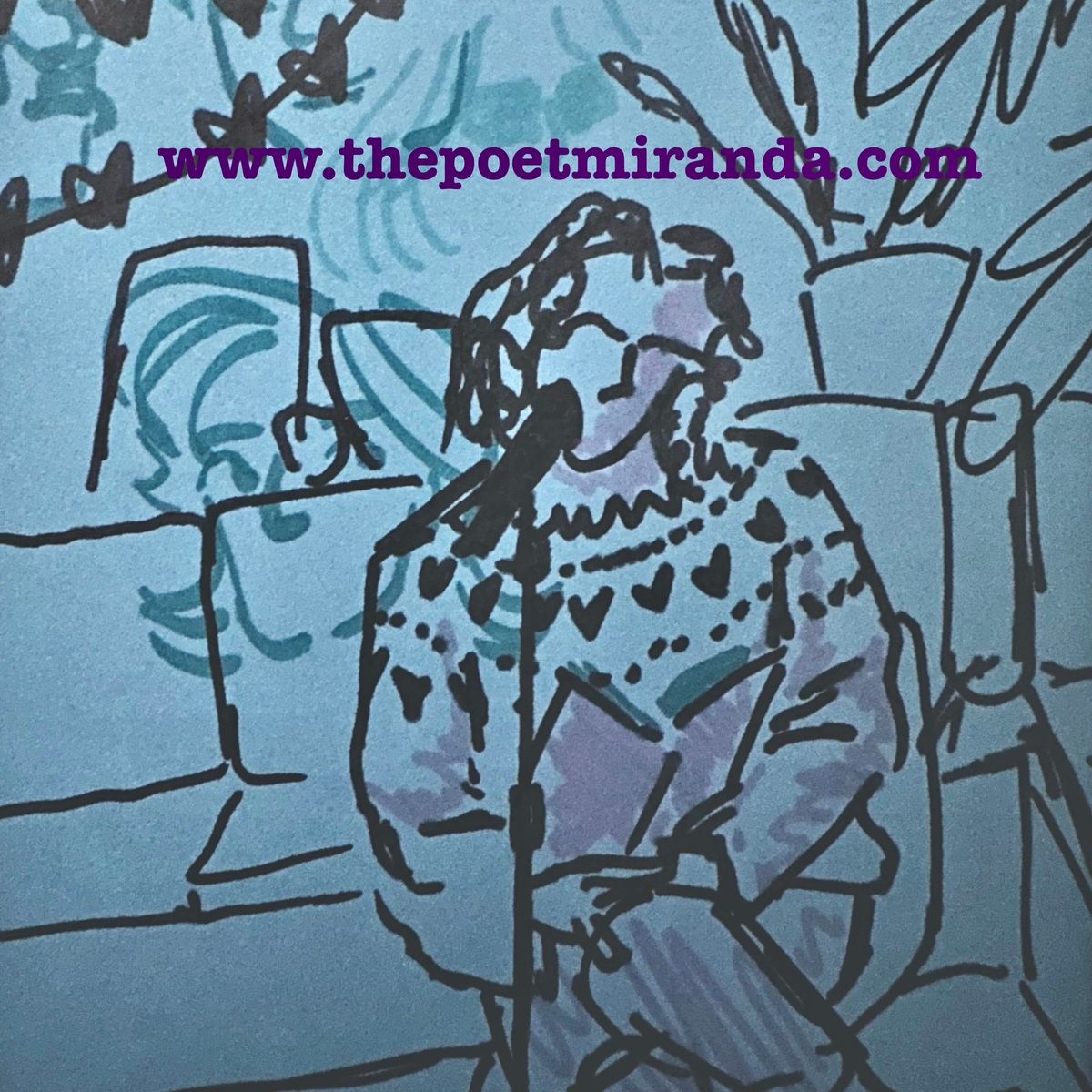
She would have been twenty-three, Onyx said, and the words landed on the bar like stones dropped into still water, concentric rings spreading outward until they hit Sage at the corner table, where their colored pens stopped moving — Sage, who'd been drawing something intricate on a bar napkin, who had been drawing since they sat down, who I realized now was drawing a face.
Katie's face.

Working from memory or from photos Onyx must have shared, Sage's hand moved in that quiet deliberate way — not artistic flourish but devotional practice, the kind of attention reserved for illuminated manuscripts and the careful reconstruction of someone who deserved more than nineteen years. Their silence said what their voice wouldn't: I'm making her real on this paper because something made her unreal in that house.
Keira had moved to lean against the bar beside me, hip against the wood, watching Sage draw with an expression that contained, somewhere in its layers, the particular fury she reserves for the world's failures toward children.
Erik arrived still in factory coveralls, steel-toed boots trailing assembly-line grease. He read the room from the top of the stairs — exits, threats, emotional temperature — then came down with a quiet nod toward Miguel.
The usual?
Yeah. Thanks, man.
Small exchange. Ordinary. But Erik's yeah carried the particular weight of a man who keeps his own calendar of people who didn't make it.
Onyx shifted on their stool, and the papers rustled, and the chamomile steam had thinned to almost nothing.
I wrote something, they said. For her. I write something every year. This one's — A pause. Onyx's jaw tightened. I watched the muscles work under their skin, watched them fight the thing that lives in their throat on the nineteenth of every March, the creature made of tears and fury that wants to swallow every word before it's spoken.
This one's harder.
Read it, I said. Not a question.
Onyx looked at me. Their eyes were enormous, liquid, already ruined.
They picked up the top sheet. Hands shaking. The pen marks blurred where something wet had already fallen.
And Onyx read.
She built rooms in worlds that didn't exist yet. Their voice was barely above speaking, not performance, not poetry-reading projection — just a human being talking to the air and hoping the air remembered. Pixel by pixel. Block by block. Walls where there were none. Doors that opened because she placed them. She understood — before any of us could teach her — that architecture is the first act of selfhood. That you build the room you need before you have permission to enter it.
The bar went quiet. Not silent — the Moody Blues were still finishing their orchestral lament — but the human sounds stopped. Conversations paused mid-syllable. Grubby, seated near the pool table with a water glass they hadn't touched, went absolutely still in a way that meant they were listening with their entire body.
Filipino-American. Autistic. Transgender. Nineteen. Onyx's voice cracked on the number. Each word a target and she wore them all at once like armor she shouldn't have needed. Like armor that wasn't enough.
I didn't plan to speak. But something in the room pulled it out of me.
I need to tell you something about her hair, I said, and my voice surprised me, because it sounded like it had been waiting four years. She changed it constantly. Every few weeks, something new. And I asked her once — we were texting, two in the morning, the hour trans women do their real talking — I asked her why. I had to stop, had to let the Balvenie work. She said changing her hair was practice. Practice for becoming. That every color was a draft of a self she hadn't finished yet, and the beauty was that she never had to finish. She could just keep becoming.
I set the glass down hard enough that it rang against the wood.
She was nineteen and she understood something about identity that most people never figure out in a whole lifetime. And somebody who was supposed to be her father took that from the world.
Onyx's hand found mine on the bartop. Our fingers laced together and we held on the way drowning people hold onto each other — imperfectly, desperately, with the understanding that neither of you is shore.
Her smile could split atoms, Onyx said, and then stopped, and the stop was the loudest sound in the room. They pressed both palms flat against the bartop. The ceramic mug trembled between their wrists. I put my hand on their shoulder — not firm, not grabbing, just the weight of one person's hand saying I'm here and you can keep going or you can stop and both are fine and I will not move.
Canton, Georgia, Onyx continued, almost whispering now. Thirty miles from where we're sitting. In a subdivision where the houses have two-car garages and HOA-approved mailboxes and the kind of landscaping that suggests nothing terrible could happen there. And a father who —

Who chose the gun, I said, because Onyx couldn't, and someone had to, and my windpipe that John crushed to seventy percent still works well enough to carry the words that other people's throats won't hold.
My jaw had locked. I could feel it — the tectonic shift, the plates grinding, the fury that starts in my sternum and radiates outward until my hands want to break whatever's closest. Keira felt it too. She always does.
Breathe, Keira said, quiet as a closed door. Her voice didn't waver. It never does when I'm on the edge. Stay here with us. Stay in this room.
I breathed. Let Keira's voice pull me back from the precipice where grief becomes velocity, where sorrow flips to wrath so fast you don't notice the transition until something's already broken.
Gus set his beer down. His face had gone pale — he was only two years older than Katie when she —
When she was subtracted.
That's the word the community uses. Subtracted. Like mathematics. Like someone removed her from the sum. Because that's what happens — not just the ones killed by fathers or strangers, but the ones who reach the edge of the map where the cartographers stopped drawing. The ones who find every door nailed shut by legislation and family rejection and a thousand daily violences that leave no marks, only accumulations. Only the slow narrowing.
We lose people both ways. We never stop counting.
She was proud, I said, because Onyx needed a moment and because this was mine to carry too. Proud of her heritage in a way that wasn't performance — it was foundation. She'd link me articles about AAPI advocacy and trans rights intersecting and then follow it up with a Minecraft meme that made zero sense unless you were nineteen and brilliant and building your identity pixel by goddamn pixel.
The memory of her humor lived in my chest alongside the memory of her absence, the two coexisting because grief doesn't follow physics.
She loved hiking, Onyx added, their voice steadying now that we were trading the weight. She'd send photos of trails around Canton — pine and red clay, sunlight through canopy like stained glass. She said the trails were the only place her brain went quiet. The autism made the world loud, but trees don't have opinions about your gender.
She told me that too, I said. Almost the same words.
We looked at each other and the recognition was a room with no walls. She had told us both the same truth, through the same glowing screen, and we had each carried our half like broken pottery, and only now did the edges line up enough to see the whole vessel she'd been.
She played Minecraft like it was liturgy, Onyx said, reaching for something other than death. Built cathedrals out of cobblestone and redstone. Villages where every door was open. She told me she built worlds where no room had a lock on it. Because she'd lived in rooms with locks. She knew what it meant when someone else held the key.
I drained the last of the Balvenie. The finish lingered — that rum-barrel sweetness refusing to leave, insisting on tenderness past the point where the oak wanted austerity. I set the glass down and it made a small sound against the bartop, and the sound was unbearably ordinary, and the ordinariness was the cruelest thing in the room.

Fleetwood Mac came through the speakers. Landslide. Onyx's eyes closed, and I watched them mouth the lyric about the landslide bringing you down, lips moving with the precision of someone who had sung this in the private hours where grief takes the shape of melody.
Eileen stood near the jukebox, posture perfect and eyes burning and hands balled into fists she didn't know she'd made, watching Sage's napkin drawing take shape.
She wanted to leave Georgia, I said to no one, to everyone. Her friends said that. She wanted out. She was making plans. She was —
She was nineteen, Sarah said from her spot, blunt and philosophical and precise as a scalpel finding the vein. She was nineteen, and she was making plans, and someone who was supposed to protect her decided that her plans didn't matter. That her existence was a problem to be solved with a firearm.
His own daughter, Gus said, and his voice broke on daughter like the word itself was a bone that couldn't bear the weight.
Family, Grubby said, and the single word carried the accumulated history of every person in that room who'd been hurt by the people whose blood they shared. Family is just a word until it's a weapon.
Keira's voice came from beside me, low and exact, the way she speaks when she's done filing and is ready to spend what she's stored.
The charges were dropped in 2019. He put his hands on her throat when she was sixteen, and the system said that wasn't enough to keep her safe. Three years later he picked up a gun. That's not a failure of the system. That's the system performing exactly as designed — protecting the person with the power and gambling with the person without it.
She didn't raise her voice. Keira's precision is its own volume. She looked at Onyx when she said it, and something passed between them that I recognized as the specific solidarity of people who have both loved someone the world subtracted.
Miguel poured me another two fingers without asking. I lifted the glass toward Onyx's mug of chamomile, and they understood, and we touched them together — ceramic against crystal, a clink so small it disappeared into the Fleetwood Mac — and drank in the direction of a girl who should have been twenty-three tonight.
Can I — Gus started, stopped, started again. Can I ask something that might be — I mean, I don't want to —
Ask, Onyx said.
Did she know? That she was — that he would —
I answered before Onyx could, because this part lived in my chest like a splinter I'd never been able to extract.
He'd hurt her before, I said. When she was sixteen. Put his hands around her throat and held her down on her own bed. In her own room. In the room where she was supposed to be safe.
Charges were filed, Onyx said, picking up where my voice cracked. Charges were dropped. That's how it works. That's how it always goddamn works. The system takes a note and puts it in a drawer and by then —
They stopped. Pressed both palms against their eyes. The chamomile sat forgotten.
By then it's a candlelight vigil in Piedmont Park, I finished, because we carry each other's sentences now, Onyx and I, and someone has to call the news station to explain that her name was Kathryn and she was a whole entire person, and the fact that you have to explain that is its own violence.
The bar held us. That's what the bar does. Not fix. Not solve. Hold.
Heart came through the speakers — Alone — and the irony wasn't lost, the jukebox choosing that song at that moment, because jukeboxes don't read the room but sometimes the room reads the jukebox.
Erik leaned against the pool table, arms crossed, face unreadable except for the jaw — the jaw that worked the way jaws work when a man is keeping himself from screaming. He'd been quiet all night. Erik is always quiet. But his eyes were wet, and that was enough.
When I came out, Erik said, and every head turned because Erik doesn't offer these things, my dad didn't pick up a gun. He picked up silence. Three years of silence. And I thought that was the worst thing a father could do — make you invisible. But Katie's father — he saw her. He saw exactly who she was. And he decided that being seen was the crime punishable by —
He didn't finish. Didn't need to.
Sage's hand hadn't stopped moving. Katie's smile was emerging from colored ink like a photograph developing in reverse. Around the portrait, they'd begun weaving symbols — a pickaxe from Minecraft, a trans flag rendered in colored pen, a tiny Filipino sun.
She quoted Joan Didion on her Facebook page, I said, quieter now, speaking from the personal archive I carry for the people who can't carry their own anymore. She was nineteen and she was quoting Joan Didion. Nineteen. Most kids her age were posting selfies and she was posting Didion and linking trans rights petitions and arguing with strangers in comment sections with more grace than they deserved.
She was smarter than any of us, Onyx said.
She was, I agreed. And she had this motto. She said it to me once like she was reciting scripture — model best behavior in your own sphere, break down stereotypes, and speak out. That was her creed. She lived it like a prayer.
Like if she just believed hard enough, Onyx said, the world would rearrange itself around her conviction.
It should have, I said.
It should have.
Then the Clash came through — Should I Stay or Should I Go, absurdly wrong for the moment — and Eileen let out a laugh that was half sob, the absurdity of a punk anthem colliding with a memorial cracking something open.
Nobody changed the song. Because the jukebox's refusal to grieve on schedule is its own kind of truth. Mick Jones asking his question over and over while a cold chamomile tea and an empty Scotch glass and a napkin drawing serve as altar, as proof that Kathryn Leigh Newhouse existed and mattered and wanted to leave Georgia and never got the chance.
I turned to Onyx. Their face was wrecked — mascara, foundation, the whole architecture of presentation demolished by salt water, and underneath it the raw face of someone who feels too much and knows it and wouldn't stop if they could because the feeling is the evidence that we haven't gone numb yet.
Read the rest, I said.
Onyx picked up the page again. Hands steadier now. Or maybe just resigned to the trembling.
She was not a statistic. She was not the eighth. She was not a policy failure or a headline that trended for two days before the algorithm buried her.
She was Katie.
She liked changing her hair. She liked hiking. She was proud of her heritage and loud about her rights and she believed that speaking out was enough. That visibility was armor. That if you just kept building the room, block by block, pixel by pixel, someone would walk through the door and see you and the seeing would be enough.
It wasn't.
And we live with that. Every nineteenth of March. Every time someone in our community reaches the place where the map ends and there's nothing left but the question of whether anyone will notice the silence when it stops.
We notice.
We count.
We say your name.
Kathryn. Katie. Nineteen forever. Building rooms where every door is open.
The silence that followed was not empty. It was architectural — grief insisting on tenancy, on being given a room of its own in this basement where rooms have always been built for the people who need them.
Sage stood from the corner table. Walked to where Onyx sat. Set the napkin portrait down next to the cold chamomile and the abandoned pages.
Katie's face looked up from the bar napkin — young and bright and impossibly alive in colored ink, the smile that could split atoms rendered in strokes so careful they looked like devotion. The Minecraft pickaxe beside her temple. The Filipino sun at her jaw. The trans flag folded into her hair.
Onyx's hand covered their mouth. The sound they made was not a word.
Keira moved then. She walked to Onyx's other side and stood close, and her voice was the steadiest thing in the basement.
You did that for her, Keira said. Every year you do that for her. You make sure she's not just a number on a list. That matters. Don't you dare tell yourself it doesn't.
Onyx looked up at her, and Keira held the gaze without softening — she does the harder thing, which is unwavering respect for the person dissolving in front of her.
She'd be proud of you, Keira said. She'd be so goddamn proud of you.
Onyx broke. The full structural collapse. Keira didn't touch them. She just stood there, steady as a wall.
I put my arm around Onyx and they leaned into it and I held them — not fixing, not solving, not offering the obscene arithmetic of at least she's not suffering anymore. She shouldn't have been suffering in the first place. The peace she deserved was the kind you get while breathing. While alive. While quoting Joan Didion at nineteen because you're that kind of extraordinary.
Pink Floyd came on. Wish You Were Here. And my hand stopped on the glass.
Just — stopped. Mid-reach. Because that opening — the guitar finding its way through static into the clearest, most devastating melody David Gilmour ever committed to tape — was the one Gizmo used to sing in the car. Eight years old, strapped into the booster seat, belting the words like she understood them, which she couldn't, but the melody lived in her body the way melodies live in children, without context, just sound shaped like truth.
And now it was playing in a basement where I was holding a woman who was crying for a girl the same age Gizmo will be in a year. Who should be here. Who should be anywhere. Who should be twenty-three and alive and building impossible rooms.
I closed my eyes. The Balvenie sat untouched. My titanium leg throbbed with the barometric pressure of a Georgia March that couldn't decide what it was, and the pain was real and ordinary and it kept me anchored to the present tense where the dead cannot follow.
When I opened my eyes, the bar was still there. Keira stood where she'd been since speaking to Onyx — solid, unmoving. She caught my eye and the look she gave me wasn't comfort. It was inventory — checking my hull for cracks, finding me, for the moment, seaworthy.
Ezra's blue hair catching the light like something consecrated. Sarah's boots planted against the concrete. Della in the kitchen doorway with her arms crossed and a spatula in one hand because even grief doesn't excuse letting the stove go unattended.
Erik straightened from the pool table. Eileen unclenched her fists. Gus wiped his face with the back of his hand and didn't apologize for it. Grubby's water glass caught the light the same way the Balvenie did — differently transparent, differently honest.
Miguel had placed a single tea candle on the bartop beside Sage's portrait. I don't know when. He does things like that — quiet liturgies disguised as bar maintenance. The flame was small and orange and absolutely steady.
Onyx folded their pages. Pressed them against their chest. Looked at the portrait. Looked at the candle. Looked at me.
Same time next year?
Same time every year, I said. Until it changes. Until it's different. Until we stop having to do this.
That might be forever.
Then forever.
The candle burned. The Pink Floyd faded into silence. Somewhere above us, through the floorboards and the brick, the world continued its indifferent rotation, oblivious to the fact that beneath a tavern on a forgotten side of downtown, ten people and a napkin drawing and a cold mug of chamomile were holding vigil for a girl the world had not held tightly enough.
We held her anyway.
We hold them all.
"When we speak we are afraid our words will not be heard or welcomed. But when we are silent, we are still afraid. So it is better to speak." — Audre Lorde
Lorde understood — with the precision of a woman who lived as Black, lesbian, feminist, warrior, poet, and mother in a world that would have preferred her silent on every count — that fear is the constant. It lives in speech and in silence alike. It is not the variable. The variable is what we do with the breath between the fear and the next moment. Katie spoke. She advocated. She modeled the best behavior in her own sphere and broke down stereotypes and spoke out, and the world killed her anyway, and the temptation is to say it wasn't enough, that speaking failed her. But Lorde's insight is more surgical than that. She isn't saying speech will save us. She's saying silence won't. And if neither option guarantees safety, you might as well choose the one that leaves a record. The one that lets someone, someday, in a basement bar on a March evening, say her name and mean it. Kathryn. Katie. She spoke. We heard. We speak her now.

